

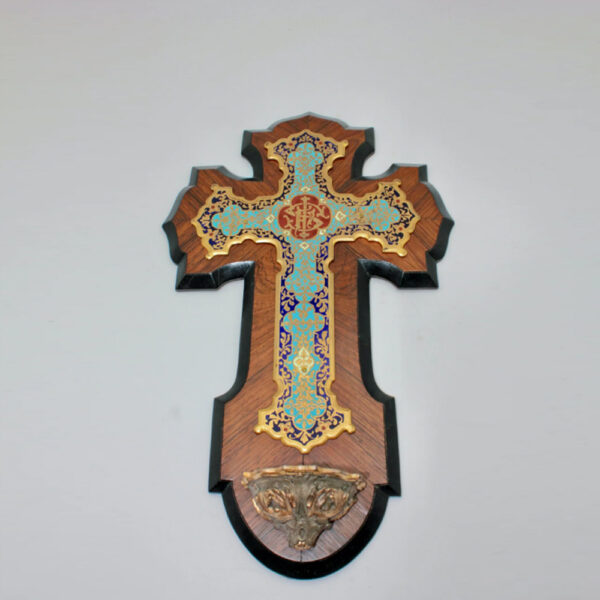
Gilded bronze and cloisonné enamel Crucifix Holy Water Font – F. Barbedienne
$139.00
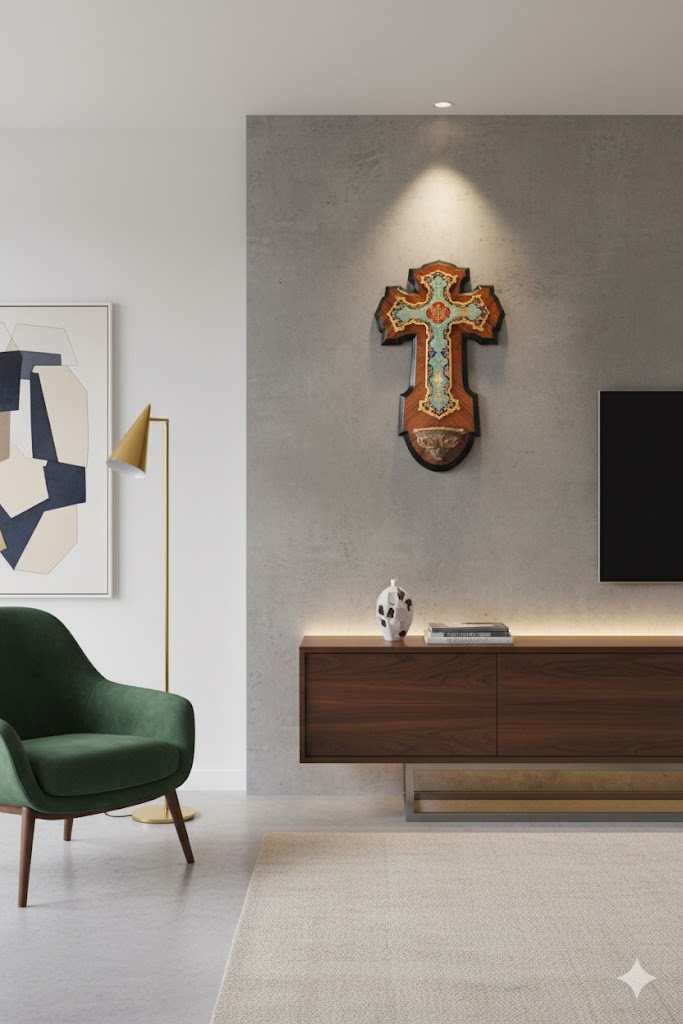
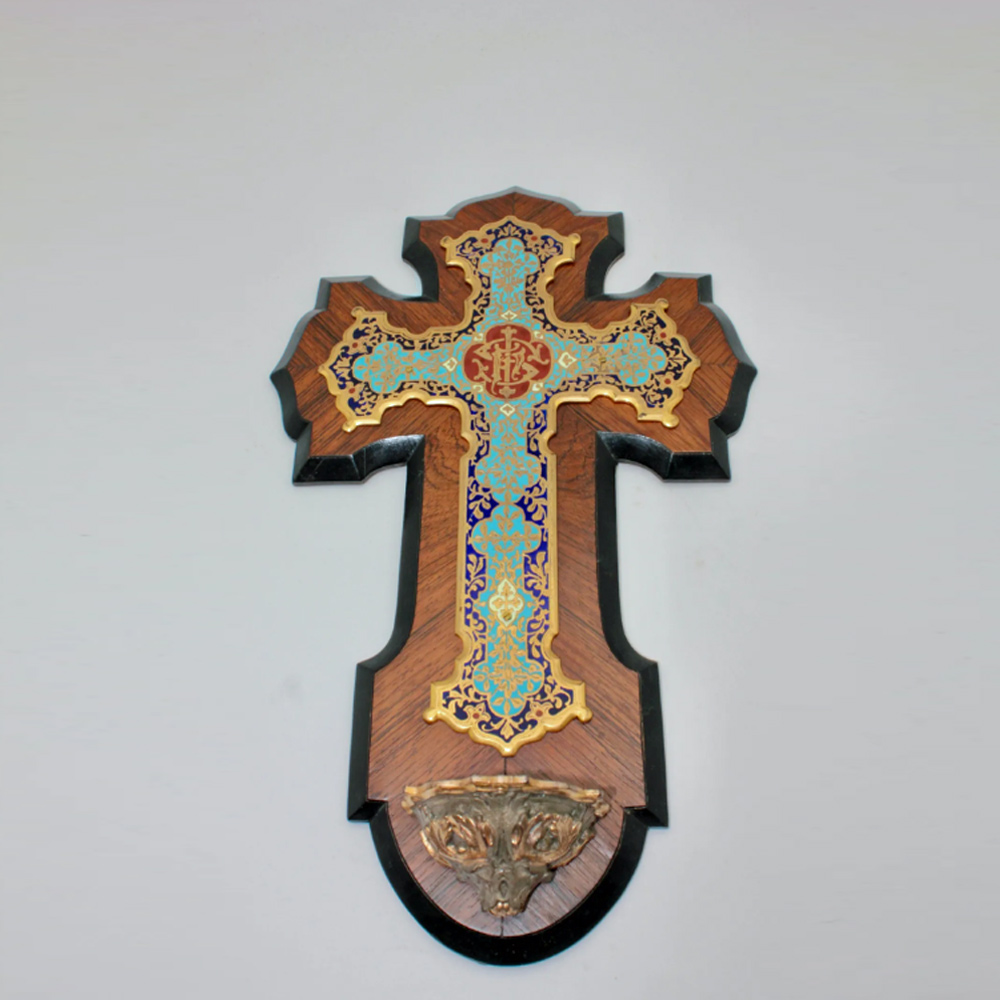
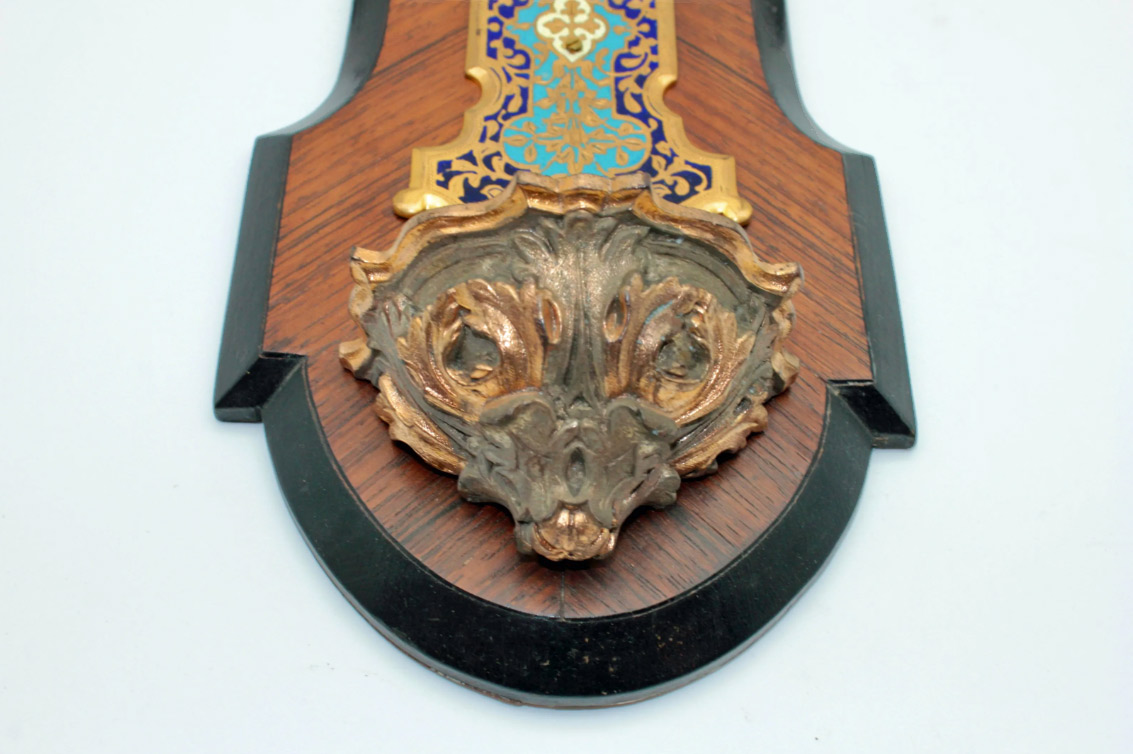
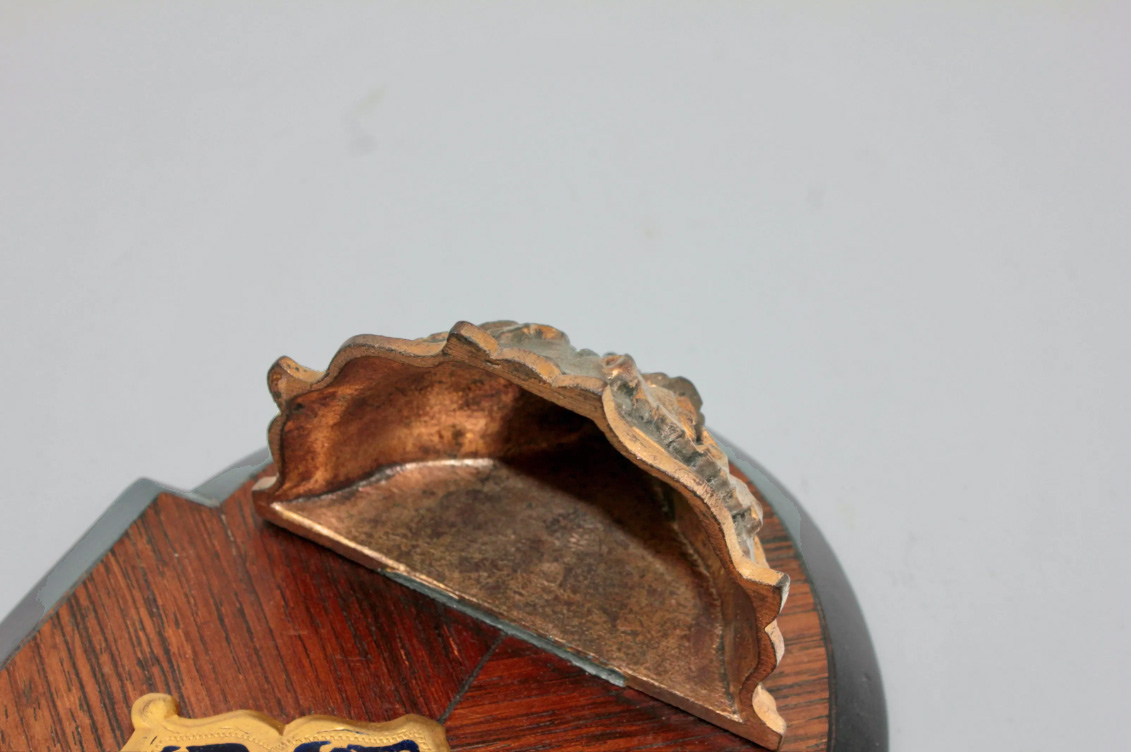
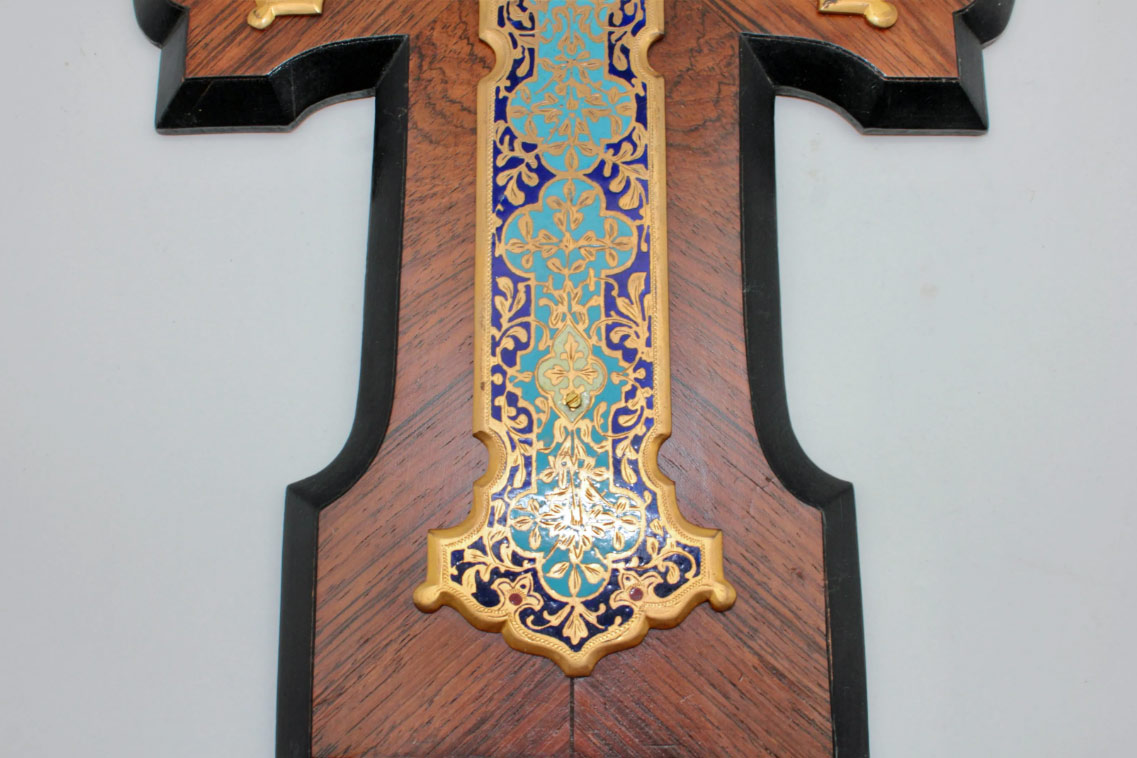
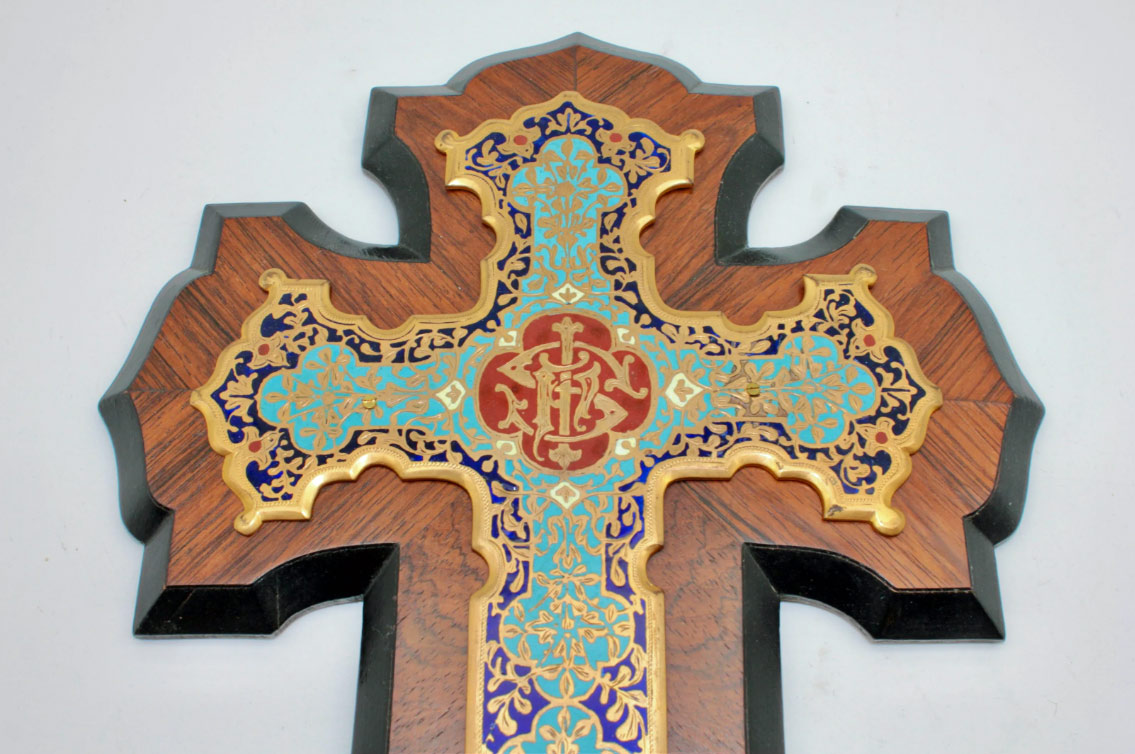
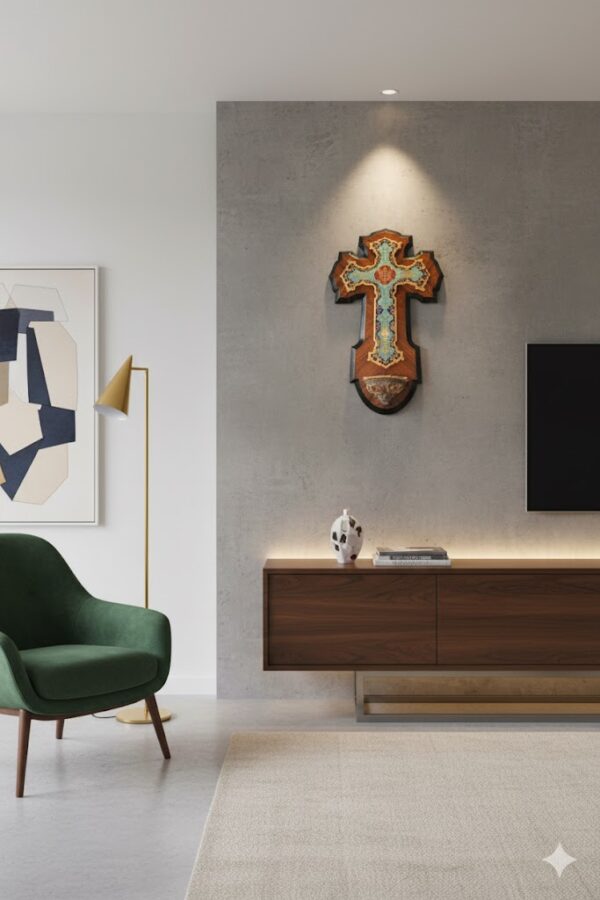
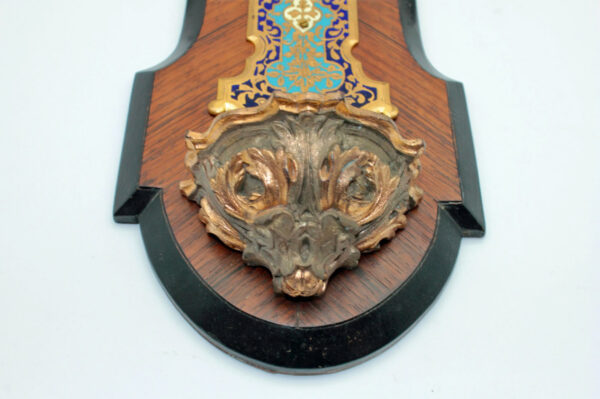
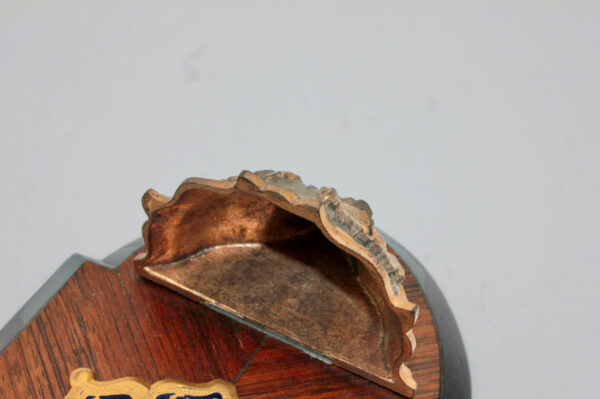
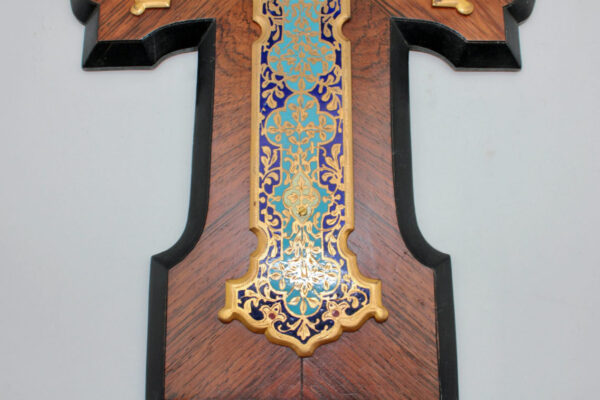
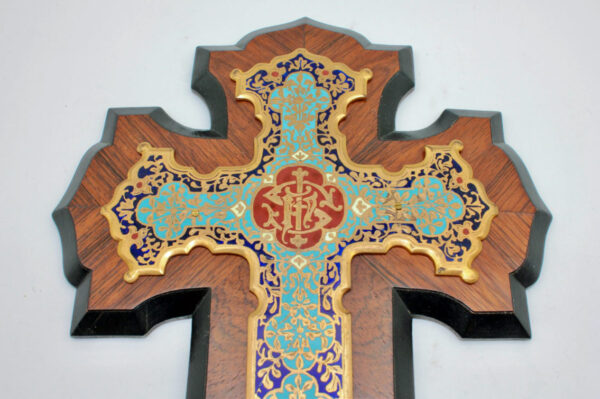
This elegant gilded bronze and cloisonné enamel Crucifix Holy Water Font is crafted in the pure style of Ferdinand Barbedienne’s castings, a pioneer of art bronze editions from the mid-19th century. This large 42 cm cross captivates with its gilded foliage decorations framing shades of royal blue and sky blue enamels. Its spirit lies in the fusion of flamboyant Gothic and neoclassical styles typical of the mid-19th century. This religious and decorative art object will easily find its place in interior decoration in a living room.
At my grandmother’s house, crosses were found above beds with a small blessed boxwood branch from Palm Sunday. Jesus, arriving in Jerusalem a week before the Jewish Passover, was welcomed by the crowd with palm branches under his feet.
Refined religious art
In very good condition, this gilded bronze Crucifix Holy Water Font retains all its original luster with its beautiful gilding, only a small enamel loss in the middle of the right arm of the cross attests to its history.
The elegance of cloisonné enamel
The craftsmanship is very delicate, each shade of color is delineated by fine metallic partitions of great elegance. The ornamentation of this crucifix relies on the goldsmithing technique of cloisonné enamel, which appeared in Egypt in the 19th century BC, then spread to Greece, Russia, and was later used in China by the Ming dynasty. Each motif is formed using delicately soldered or hammered copper or bronze wires, delineating compartments then filled with colored enamel paste. During firing at approximately 1000°C, the metallic and ceramic pigments change color, the enamel vitrifies, becoming smooth, sparkling, and fascinatingly precise. The vibrant hues and motifs inspired by cathedral stained glass windows on this crucifix attest to the hand of an experienced artisan, capable of combining technical, artistic, and chemical virtuosity.
Bronze in the style of Barbedienne
Although this gilded crucifix does not bear a founder’s mark or signature allowing its origin to be formally identified, likely due to lack of space, the quality is very strongly similar to the works of Ferdinand Barbedienne. This piece is part of the tradition of 19th-century art bronze, when Ferdinand Barbedienne (1810–1892), through innovation, developed art editions of great finesse. His success was demonstrated by his collaborations with renowned sculptors of his time and his techniques of cloisonné enamels on gilded bronze, notably with the enamel painter Alfred Serre (1837 – 1906). His association with Achille Colas and his patent allowed for ultra-precise reductions of classical works such as the Venus de Milo (link to the shop).
The Crucifix, an object of religious art
With its elegant and spiritual presence, this gilded bronze Crucifix Holy Water Font appeals equally to collectors and lovers of sacred art. It will naturally find its place in an antique interior, a private oratory, or a cabinet of curiosities, where it will bring a touch of authenticity and serenity.
An object of devotion as much as decorative art, this cross bears witness to French craftsmanship and the refinement of the 19th century.
| Weight | 5 kg |
|---|---|
| Expertise | in the style of Barbedienne |
| Dimensions | 42 cm x 25 cm |
| Weight | 3 kg |
| Services | Discover all our elegant decorative pieces by visiting the shop. Accessible and at your service, our contact details are on the contact page. Deliveries are carefully handled and international; robust packaging protects your purchases. And finally, save us to your browser's favorites to be the first to discover our new arrivals!!! |
Be the first to review “Gilded bronze and cloisonné enamel Crucifix Holy Water Font – F. Barbedienne”
Related products
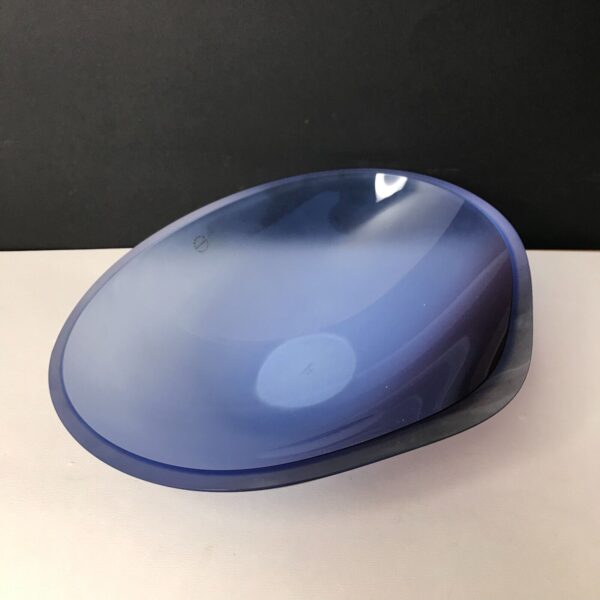
Decorative Arts, Antiques
SALVIATI MURANO VENEZIA CUP model Frammenti medio design MARCO ZITO vintage 1
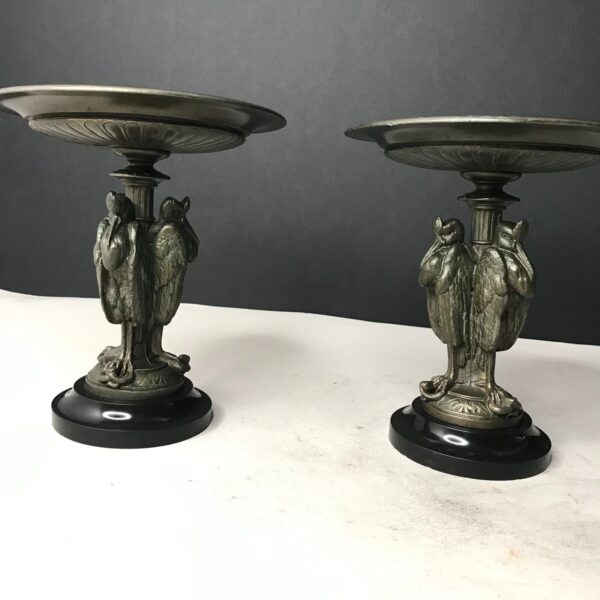
Decorative Arts, Antiques
Antique 19th C. MARABOU Cassolettes, Patinated Bronze-Style Metal, Art Deco Vintage
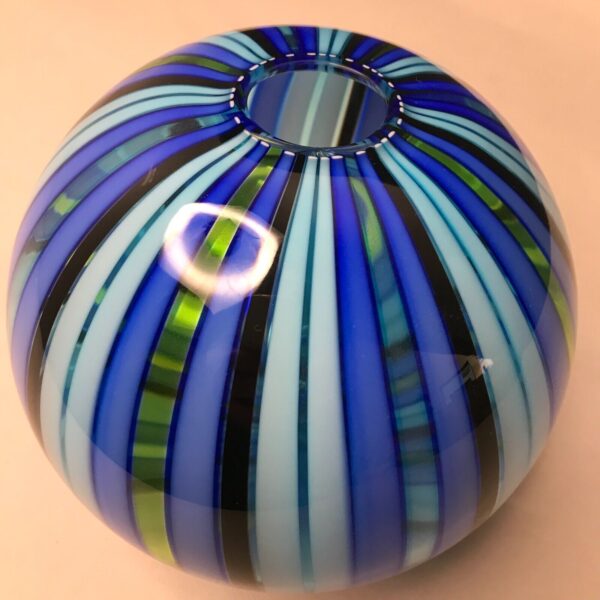
Decorative Arts, Antiques
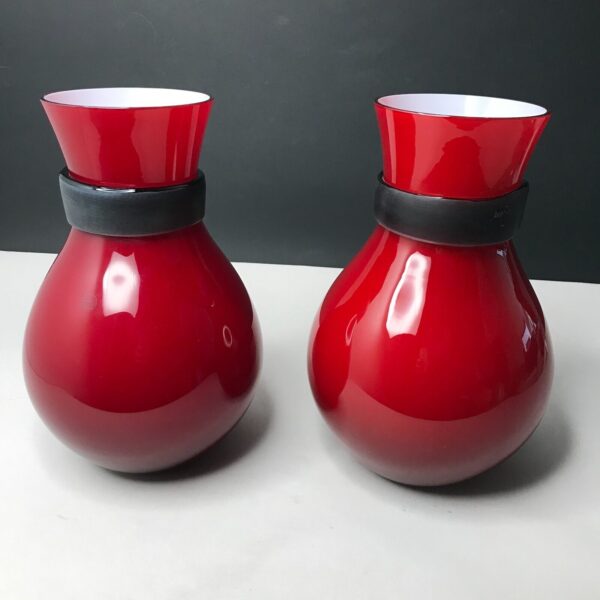
Decorative Arts, Antiques
Pair of FASCIATI Vases, Simon MOORE Design 1999, SALVIATI MURANO, Venice, Vintage

Reviews
There are no reviews yet.