

Eagle fight signed Louis Riché – Art Deco bronze sculpture with antique patina
$4,856.00
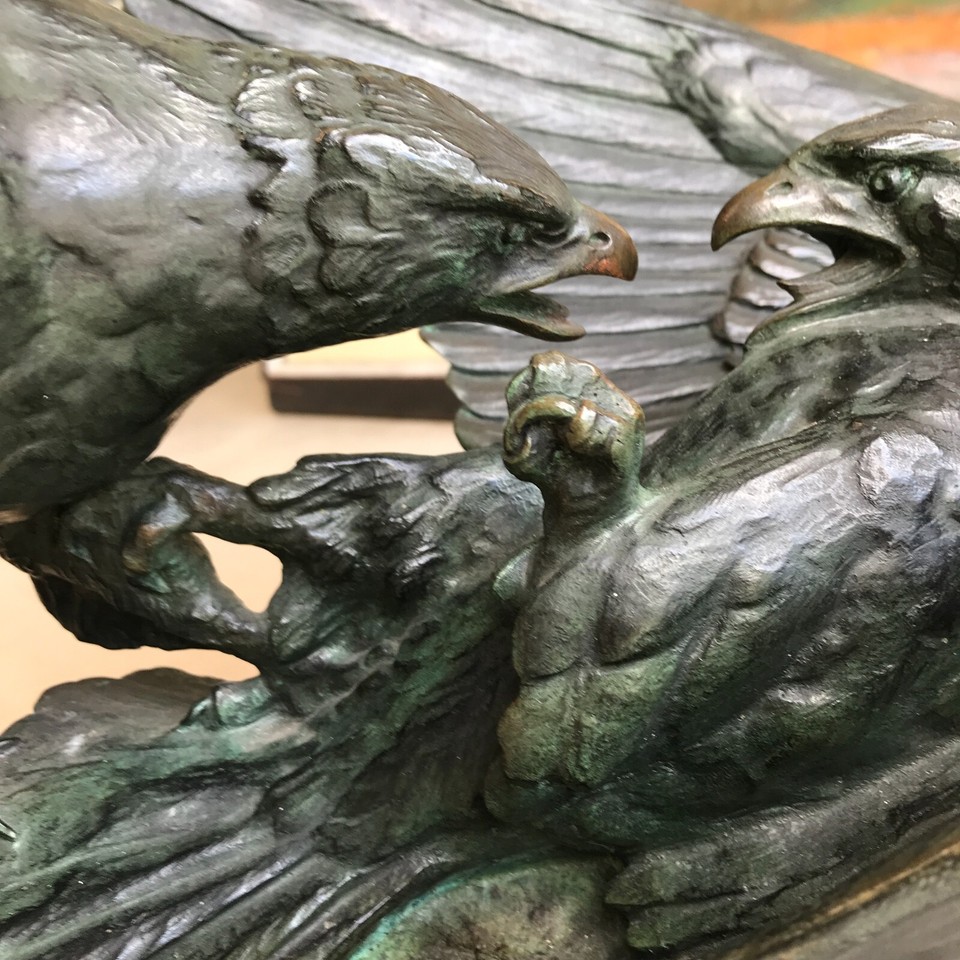
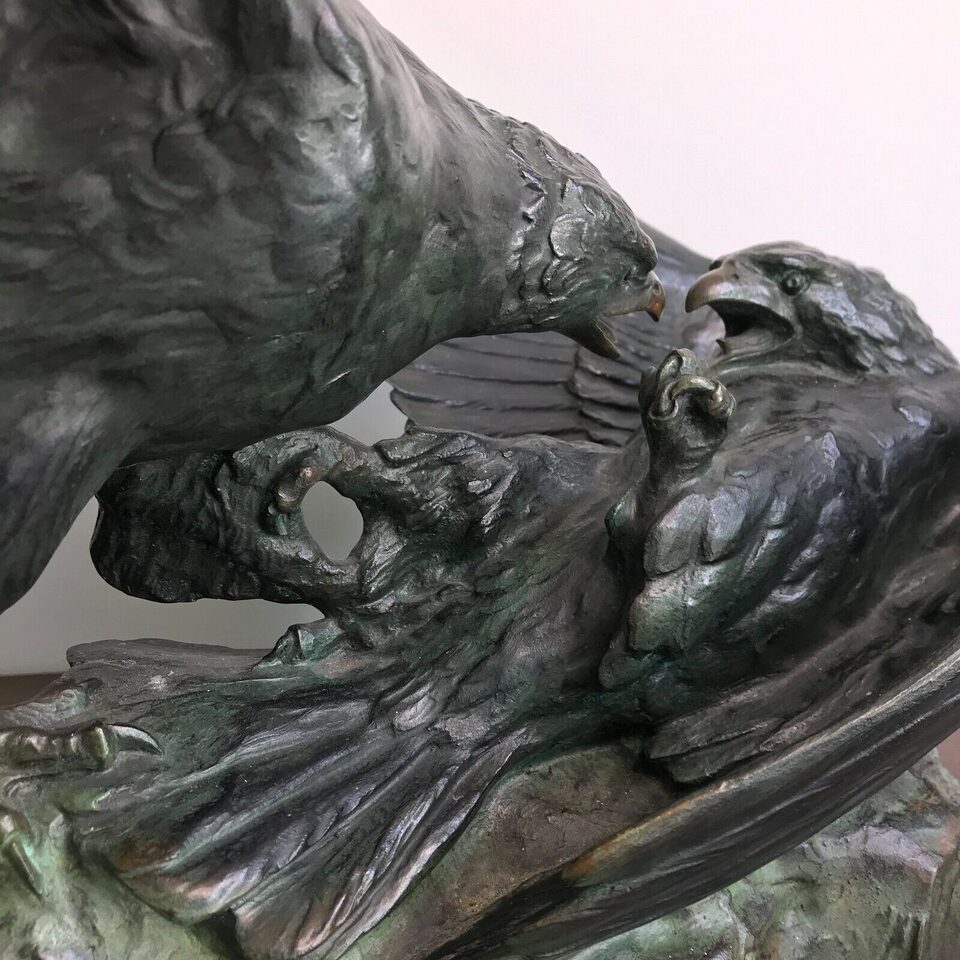
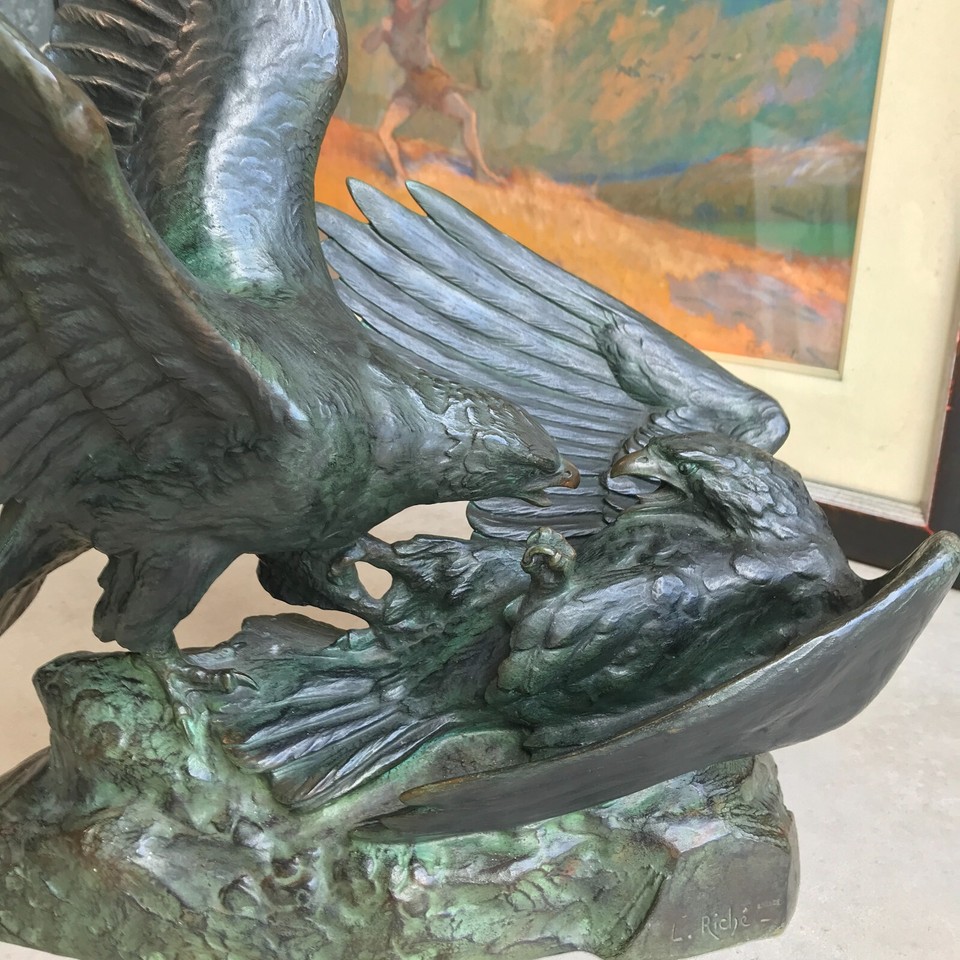
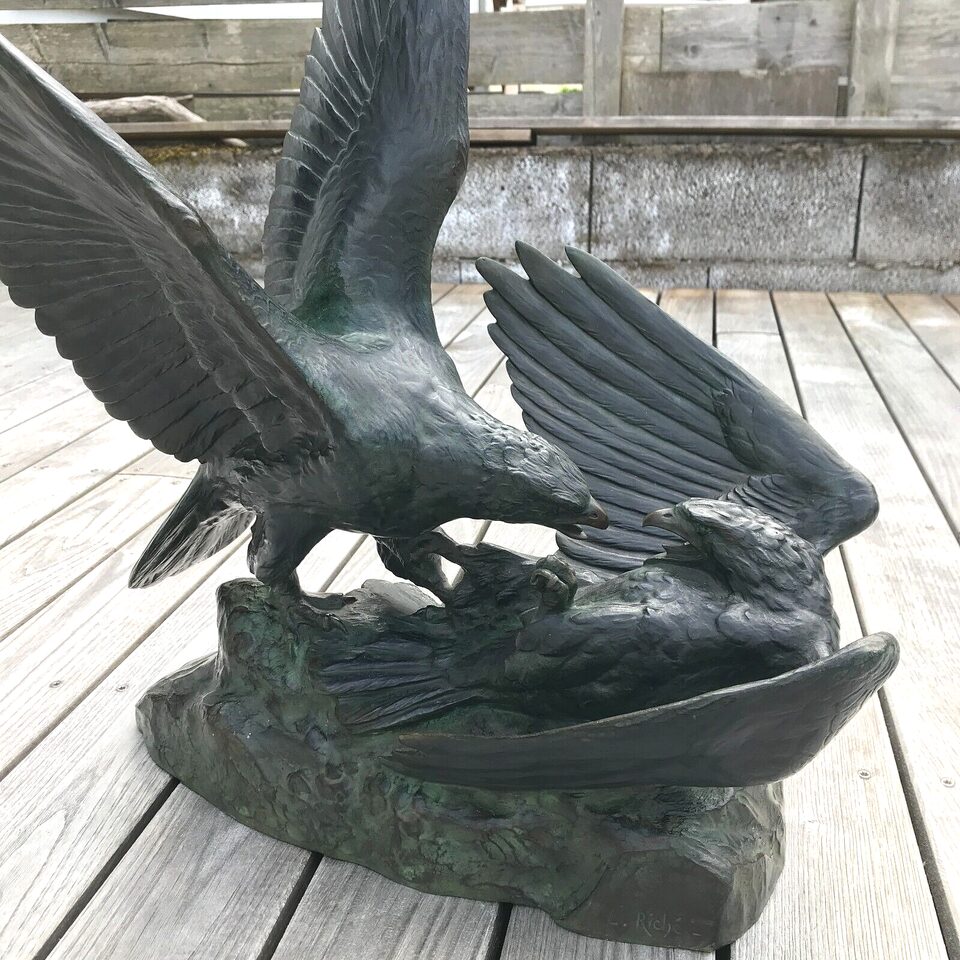
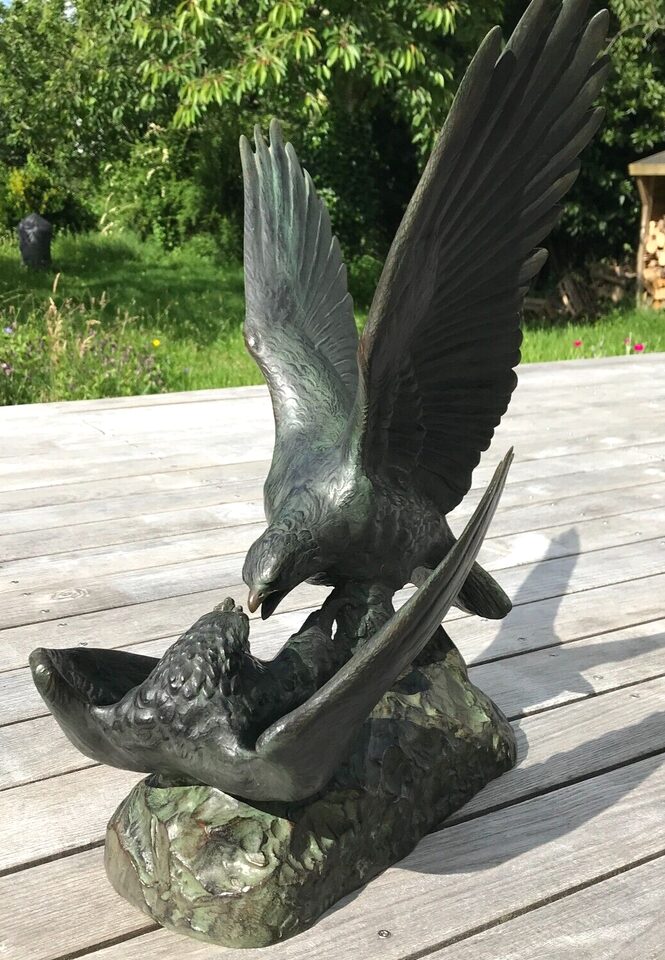
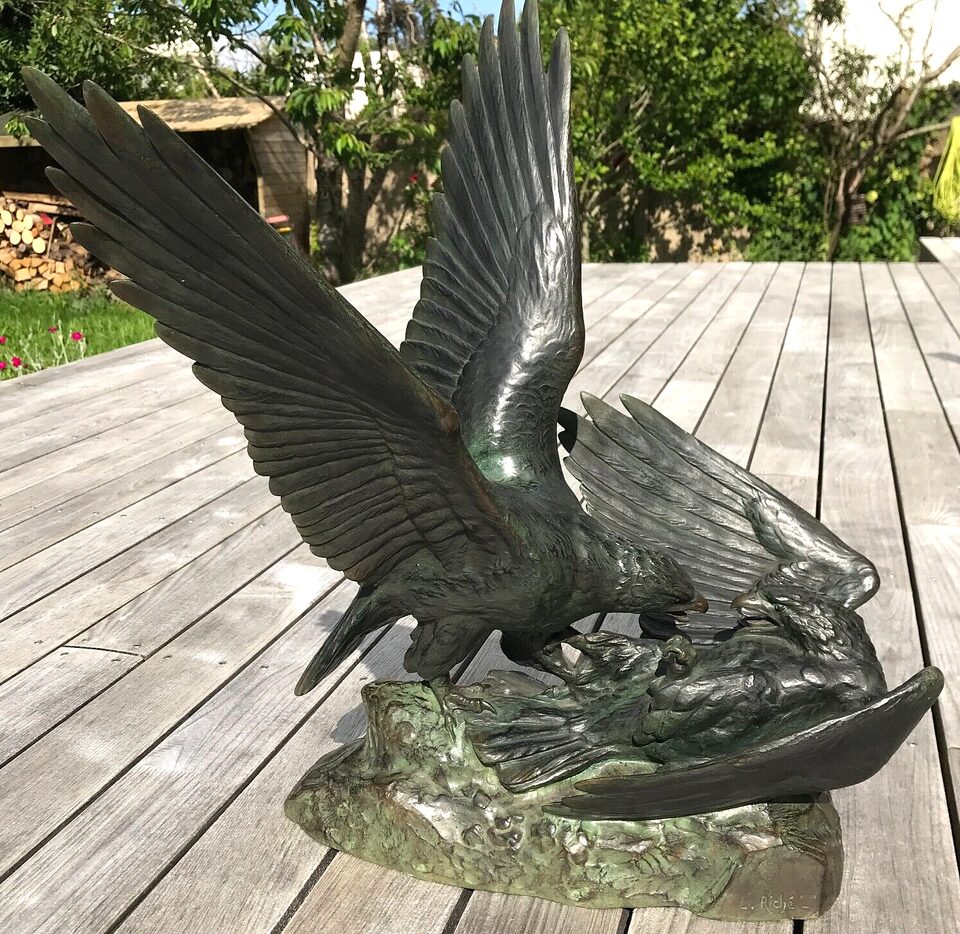
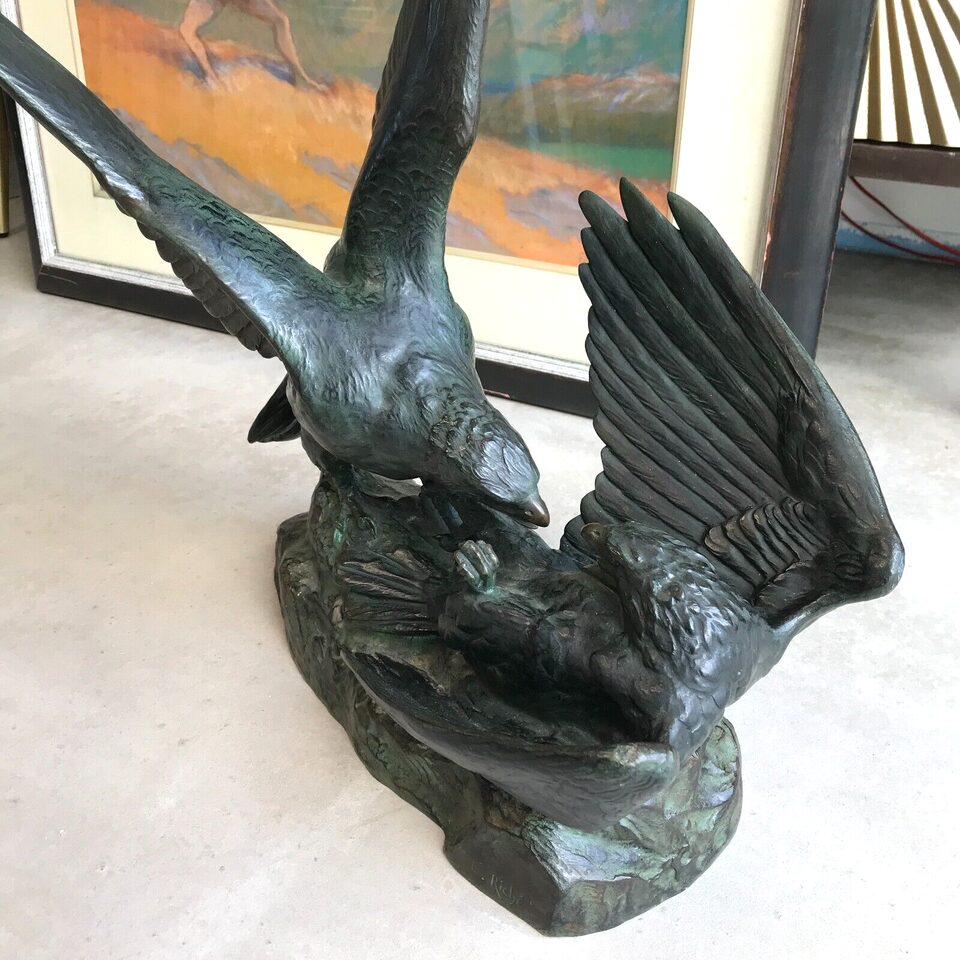
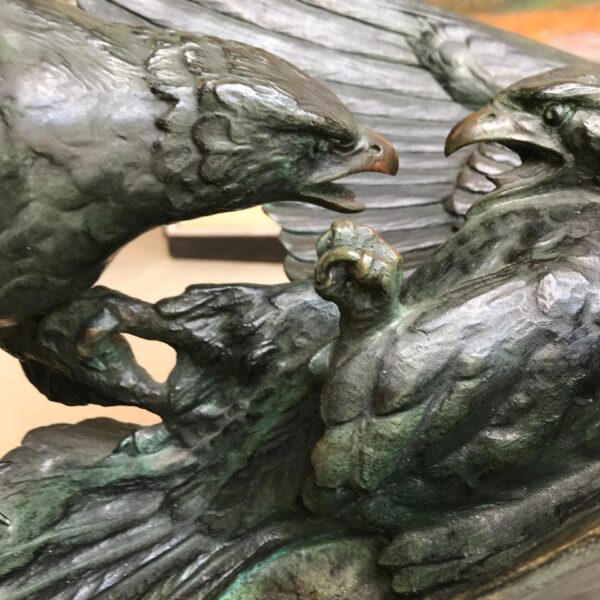
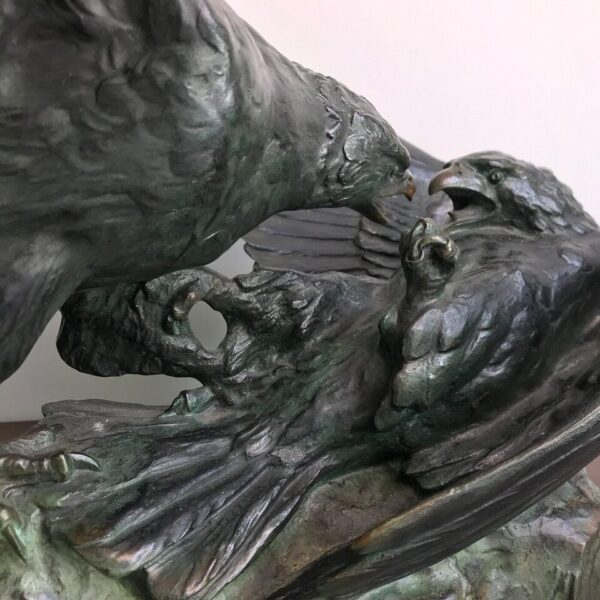
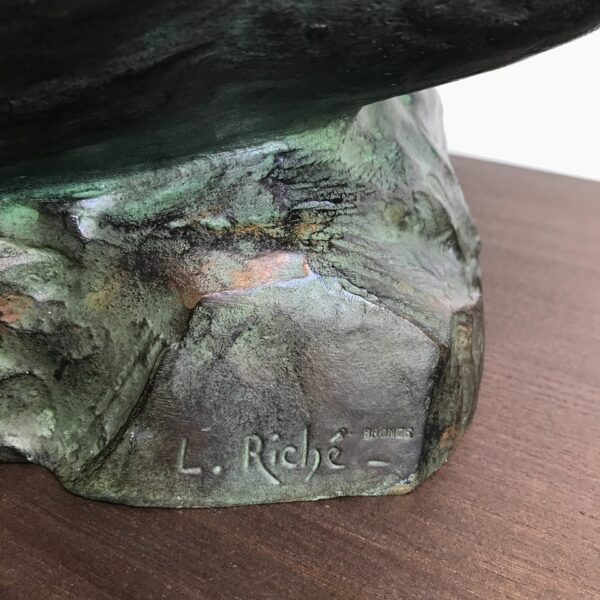
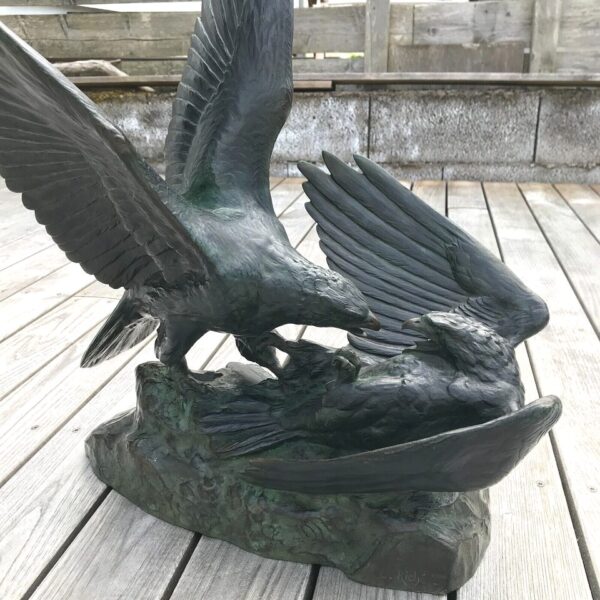
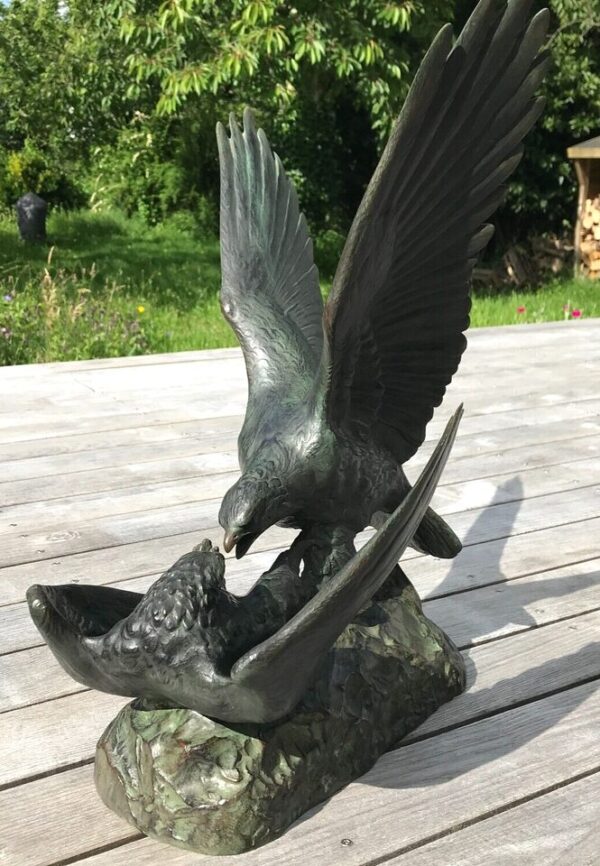
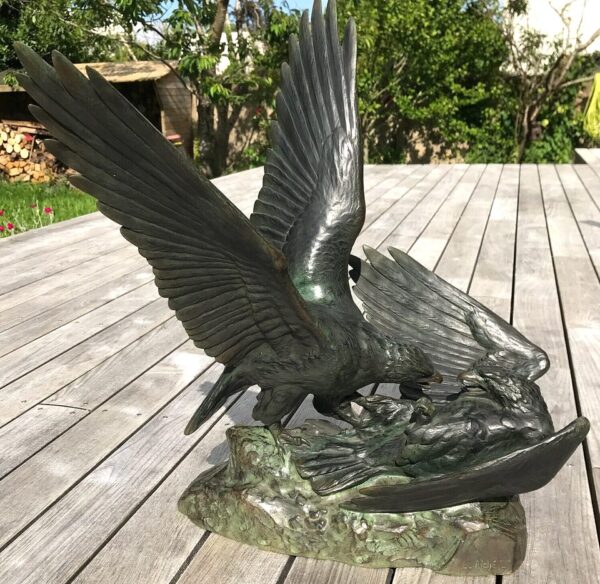
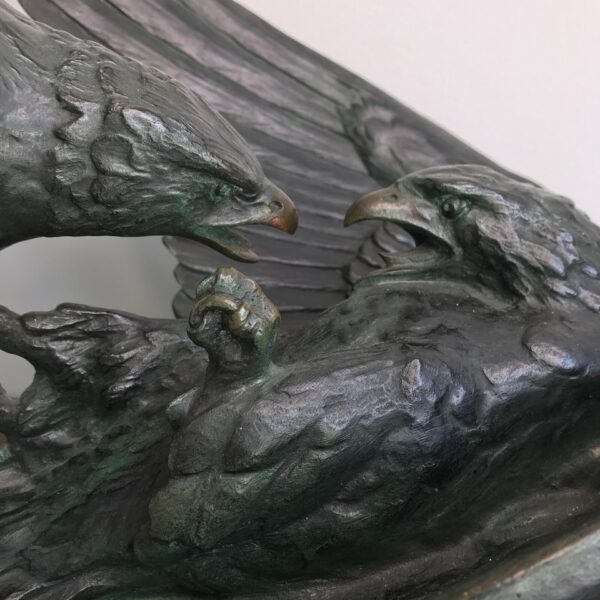
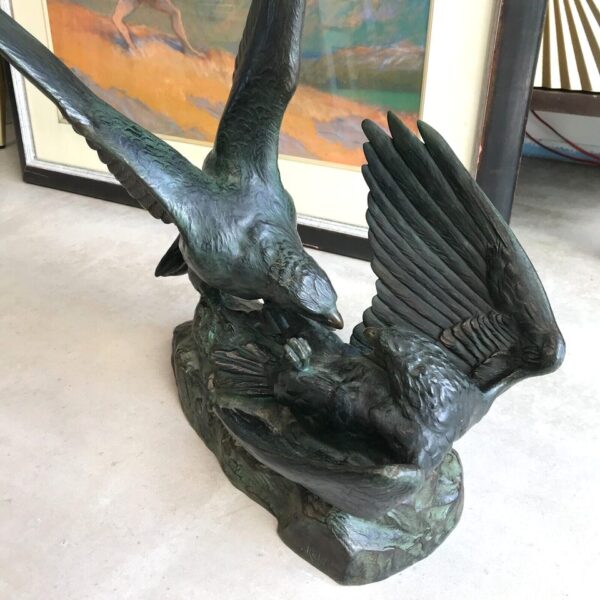
Bronze animal sculpture representing a fight of eagles, signed Louis Riché (1877-1949). The piece, made with a green patina, measures about 60 cm in height and 40 cm in width. The two birds of prey are captured in a tense movement, with a precise sense of balance and detail. Set in very good condition, representative of the naturalistic work of Riché and animal productions from the Art Deco period.
In stock
Art Deco animalist sculpture
This eagle fight by Louis Riché is a part of the French animal tradition from the early 20th century. The dynamic subject is a reflection of the time’s preference for powerful and structured animal representations. Riché, a Parisian sculptor active between the end of the 19th and the middle of the 20th century, favored compositions where realism was combined with a measured stylization, typical of the Art Deco period. His work is a reflection of this approach, with a clear structure and immediate reading of the scene.
A mastered composition
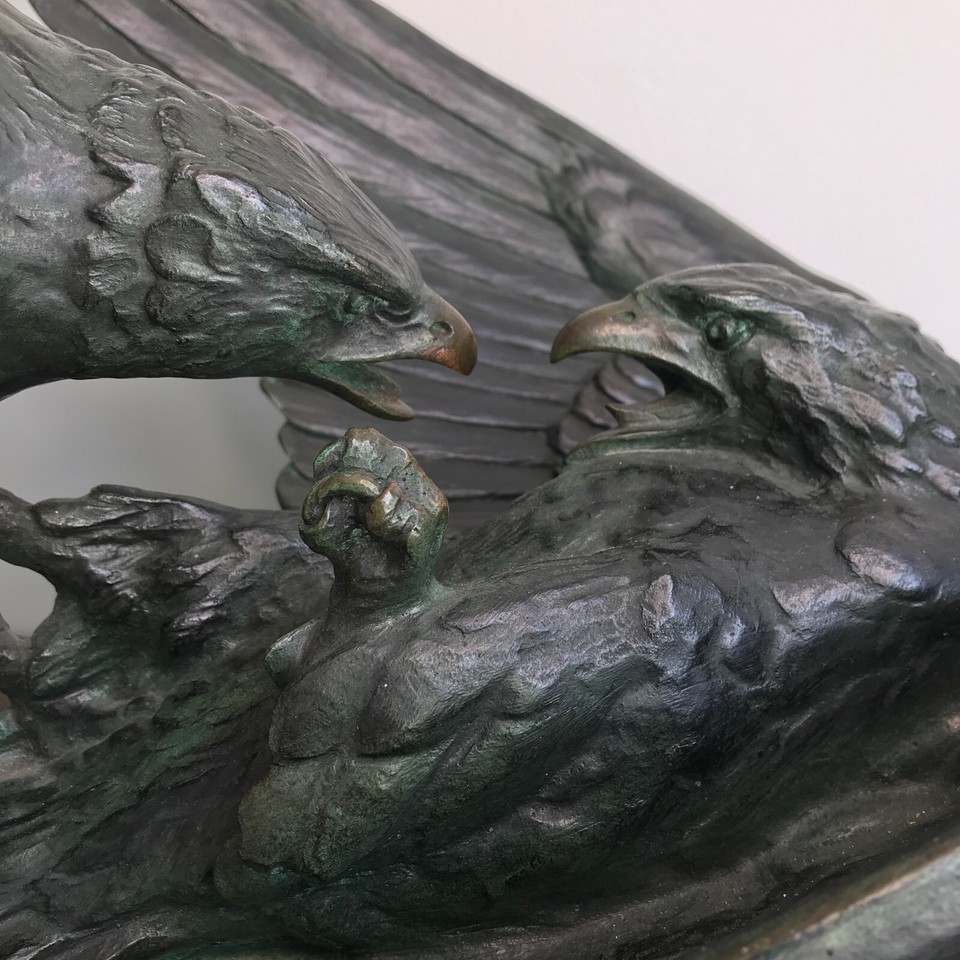
The sculpture is made of antique green patina bronze. Its dimensions – approximately 60 cm in height and 40 cm in width – give dimension to the confrontation. The two eagles, with open wings, respond to each other in a tense movement. The study of plumage, drawing greenhouses, and orienting bodies demonstrate a solid knowledge of animal anatomy. Riché favors here a balance between strength and stability. The set is based on a straightforward foundation, intended to support the composition without distracting attention from the subject.
Louis Riché is known for his sculptures of animals in motion.
Louis Riché (1877-1949) belongs to the sculptors who marked the history of French animal bronze. Trained in Paris, he began at the Salon des Artistes Français in 1896, where he exhibited regularly. His work is associated with several recognized foundries of his time. Riché explores bronze but also other materials, while maintaining a stylistic line based on the careful observation of the animal world. His work oscillates between a naturalistic basis and more refined features, influenced by the Art Deco aesthetic.
A sought-after work for collection or presentation
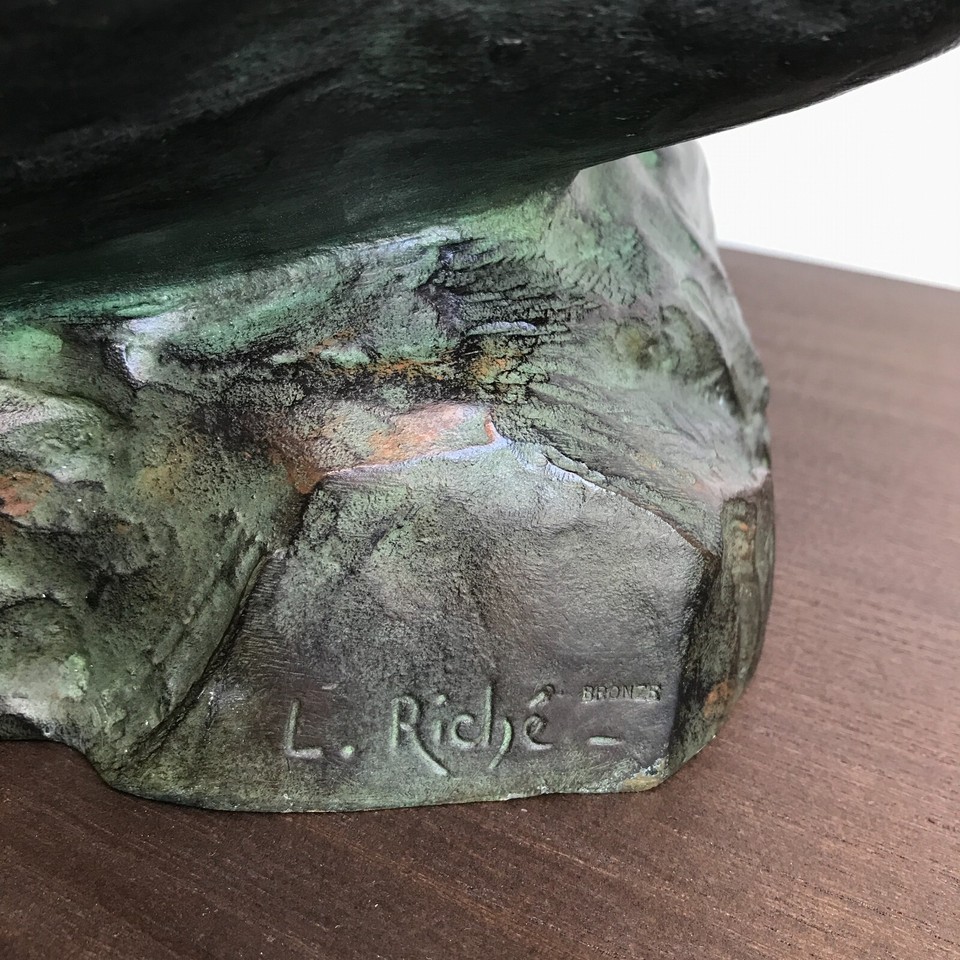
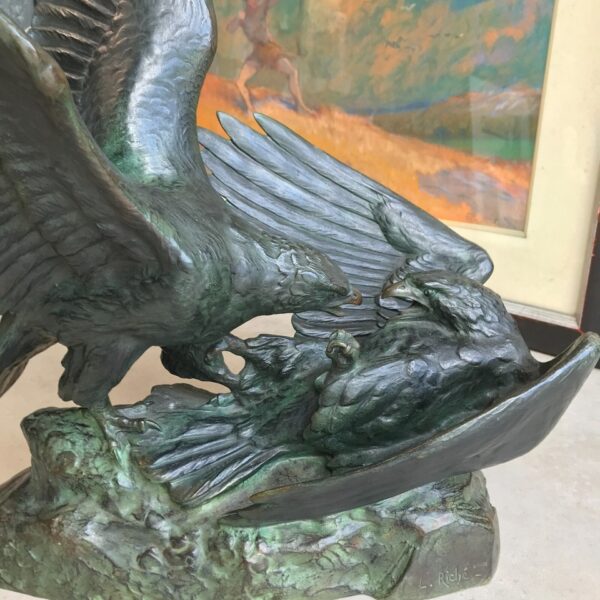
This Eagle Fight is presented in very good condition, with a patina that highlights the modeling and volumes. The artist’s signature is clearly visible. The work, by its subject and quality of execution, is suitable for specialized collections in animal sculpture or bronzes from the early 20th century. It can also find its place in a contemporary interior, where its format and structured composition create a strong but balanced presence. The whole is a representative testimony of the know-how of the French founders and sculptors of this period.
| Expertise | Bronze animal sculpture representing a fight of eagles, signed Louis Riché (1877-1949). The piece, made with an antique green patina, measures about 60 cm in height and 40 cm in width. The work rests on a stable base. Set in very good condition, representative of the naturalistic work of Riché and animal productions from the Art Deco period. |
|---|---|
| Dimensions | H. 60 cm x l. 40 cm |
| Weight | ? |
| Services | Take a look at all our elegant decorative pieces by visiting the store. Available and at your disposal, we are here on the contact page for details. Your purchases are protected by solid packaging and international deliveries are handled with great care. Finally, add us to your bookmarks to be the first to discover our newest arrivals. |
Be the first to review “Eagle fight signed Louis Riché – Art Deco bronze sculpture with antique patina”
Related products
Sculpture, bronze and ancient marble
SAILOR PILOT signed LE FAGUAYS bronze M LE VERRIER mid-century ART DECO antique
Sculpture, bronze and ancient marble

Decorative Arts, Antiques
Gilded bronze and cloisonné enamel Crucifix Holy Water Font – F. Barbedienne
Decorative Arts, Antiques
Antique 19th C. MARABOU Cassolettes, Patinated Bronze-Style Metal, Art Deco Vintage
Reviews
There are no reviews yet.