

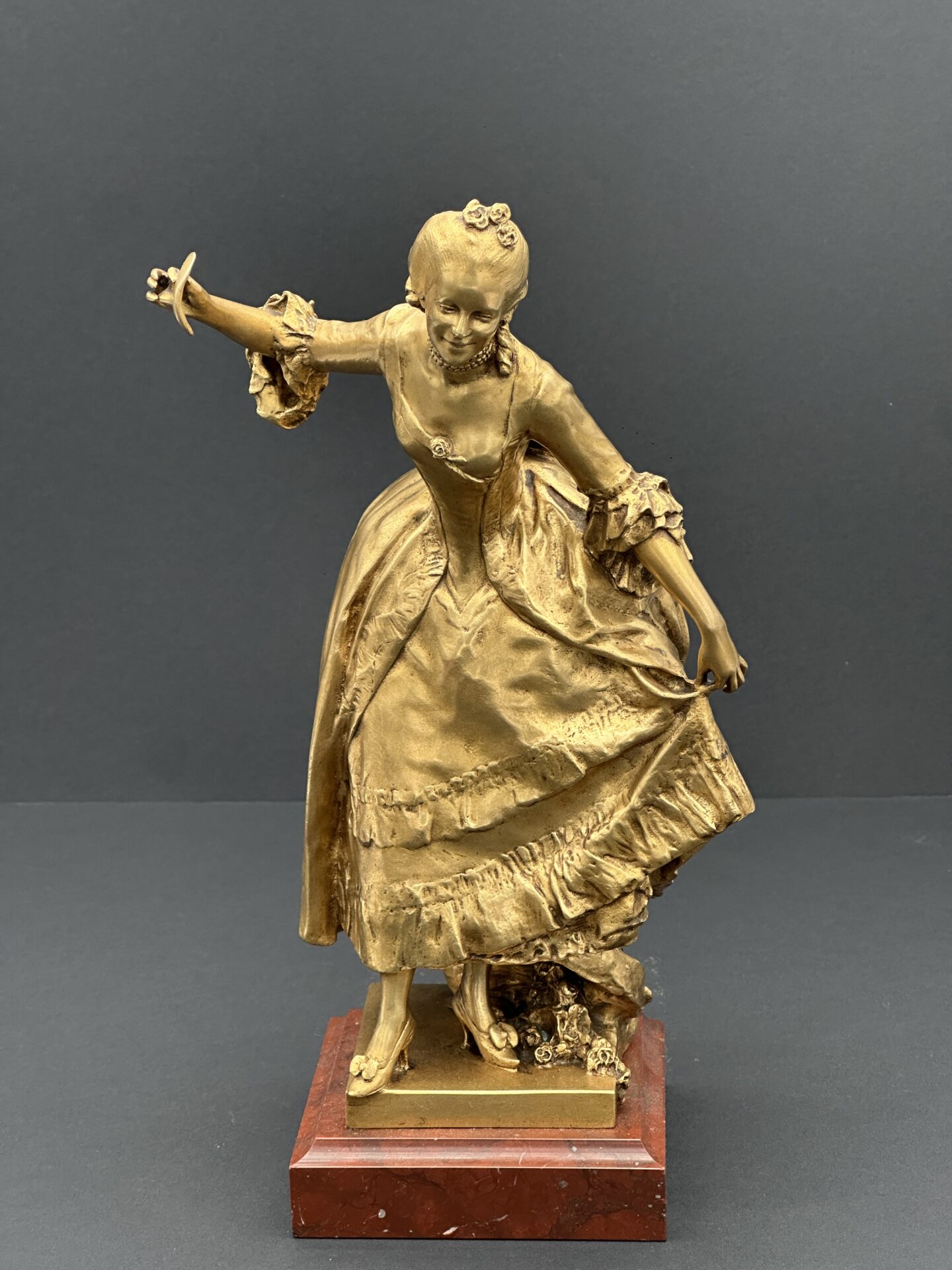
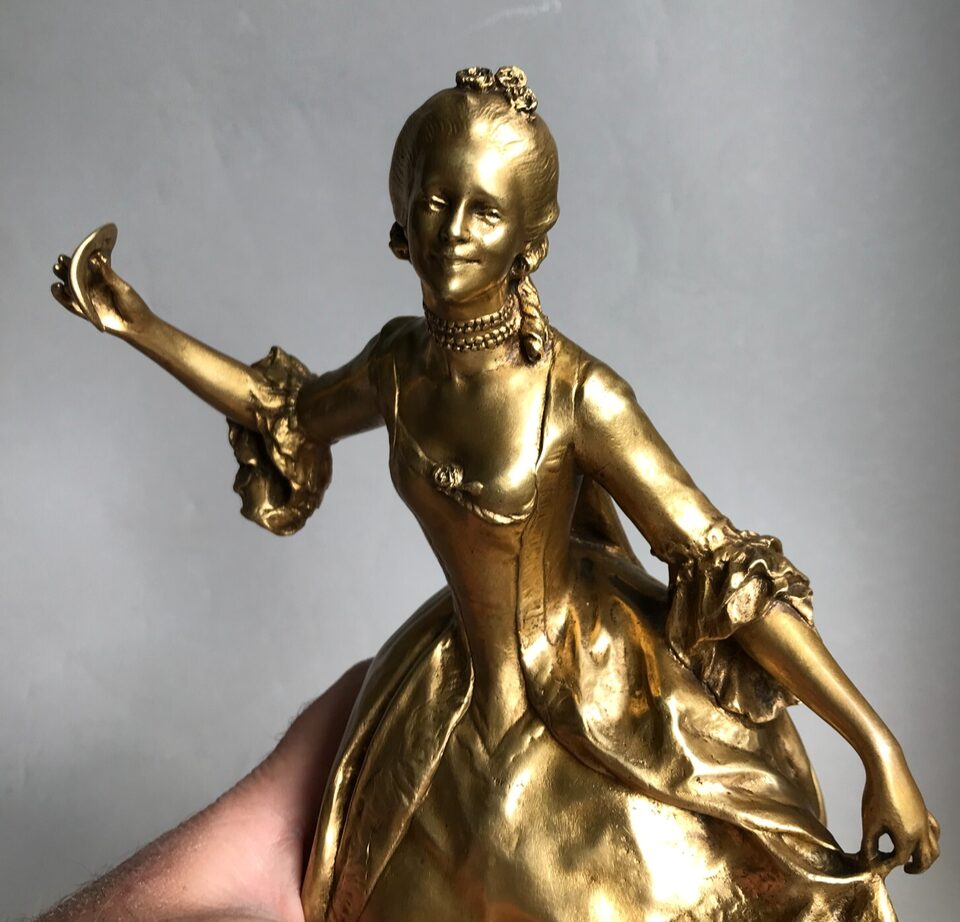
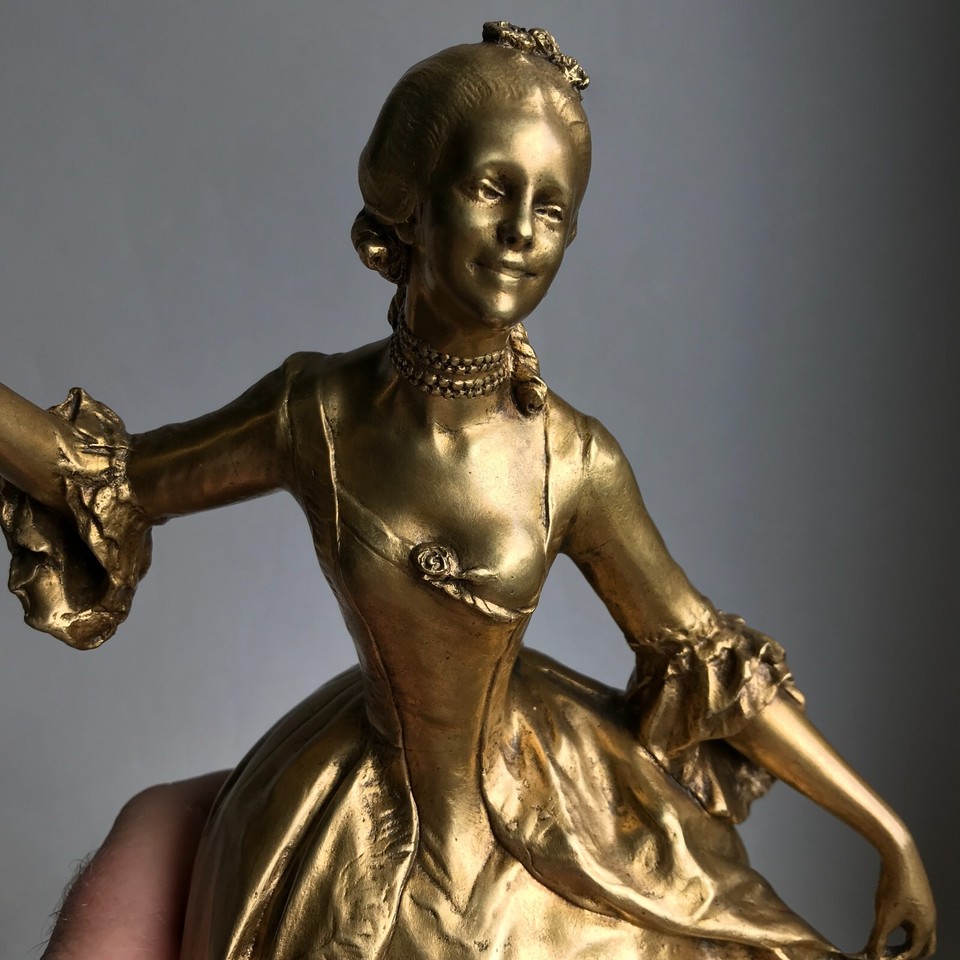
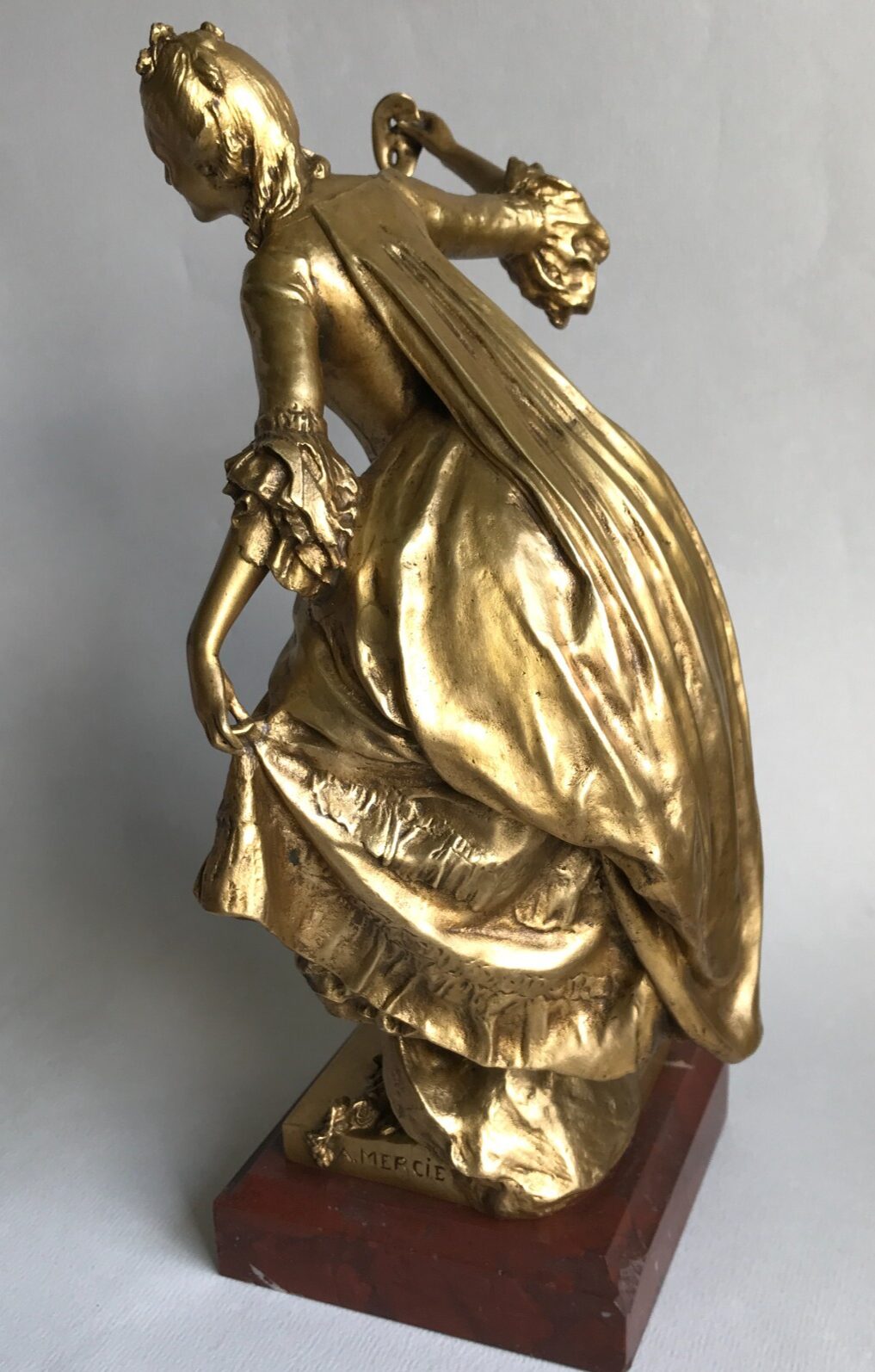
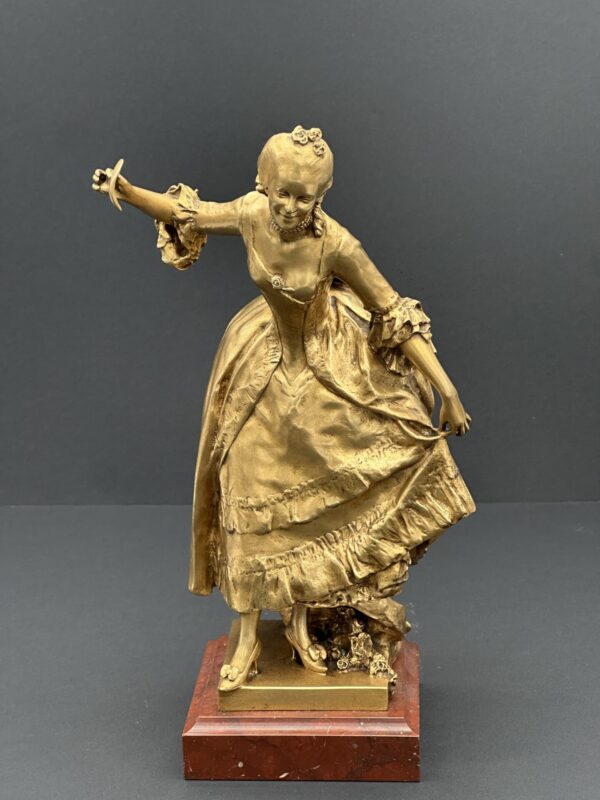
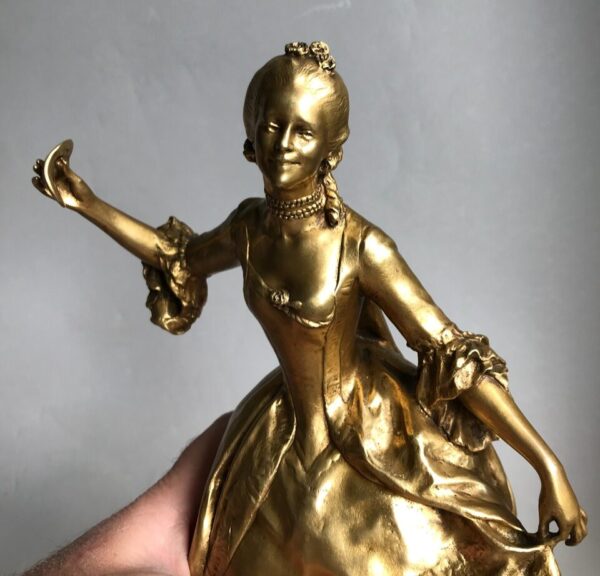
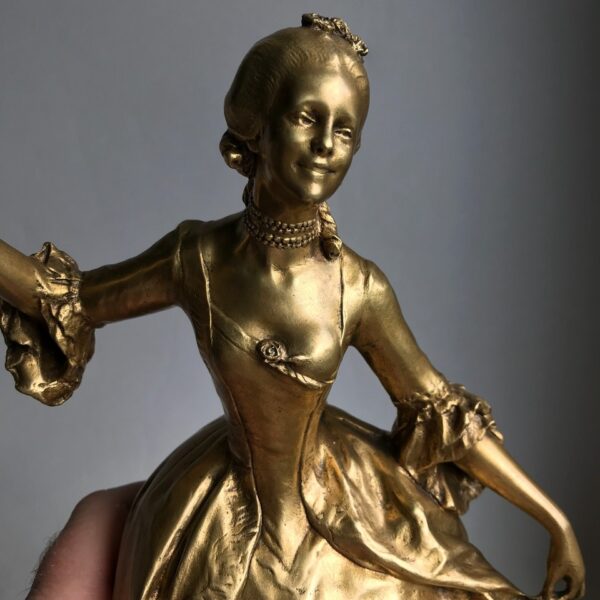
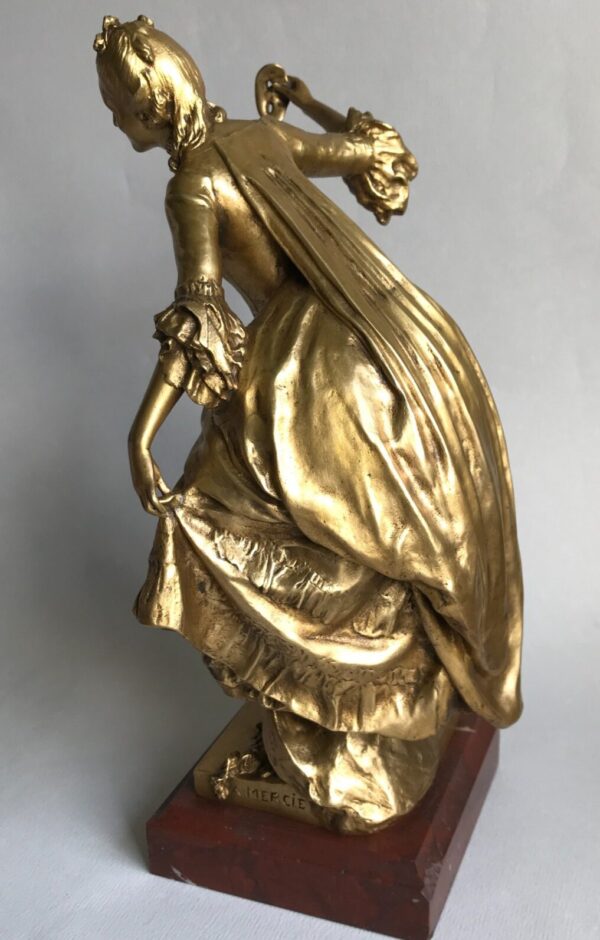
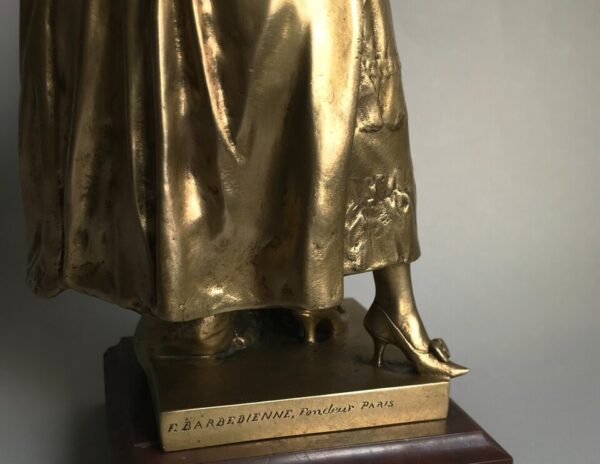
Elegant Louis XV dancer signed Antonin Mercié – Barbedienne gilt bronze, 19th century
$2,775.00
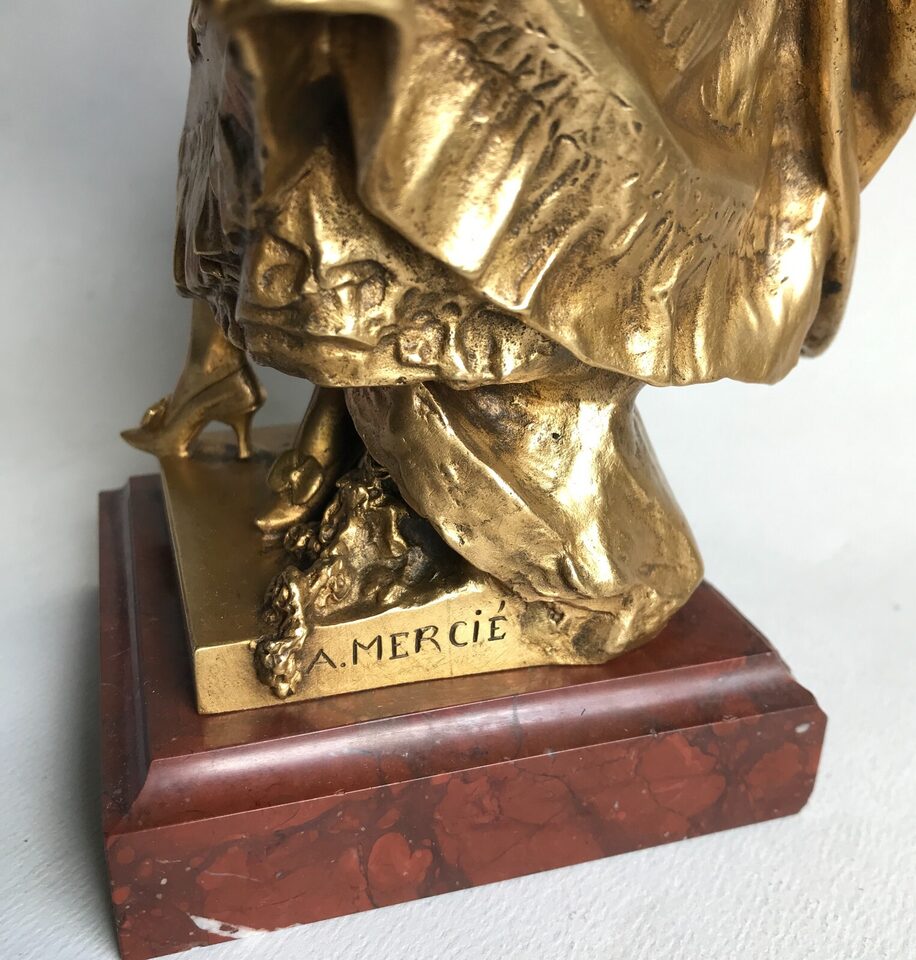
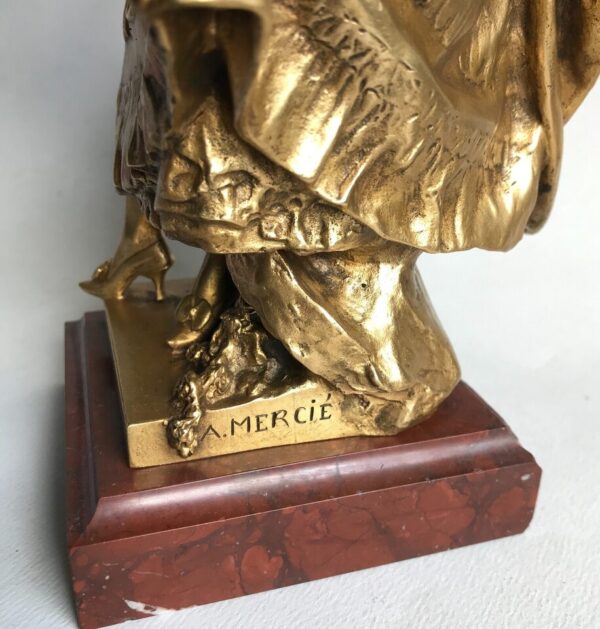
Gilt bronze sculpture representing a Louis XV dancer holding a mask, signed Antonin Mercié (1845-1915). Made by the Barbedienne foundry, it rests on a red marble base with a slight shine at the back. The set measures 29 cm and weighs about 3 kg. The piece presents a finely crafted model, faithful to Mercié’s academic style. Beautiful period work, in very good condition, suitable for a collection of bronzes or an interior seeking an elegant note.
In stock
A sculpture by Antonin Mercié
This elegant Louis XV dancer with mask is a work by Antonin Mercié, a French artist active between the second half of the 19th and early 20th century. Trained at the Ecole des Beaux-Arts, he received the Prix de Rome in 1868 and developed a career marked by careful academic production. His sculptures favor the clarity of gesture, anatomical precision and the representation of female figures with measured attitudes. This piece testifies to this approach, with a light posture and a mastered drape.
A cast from the Barbedienne workshops
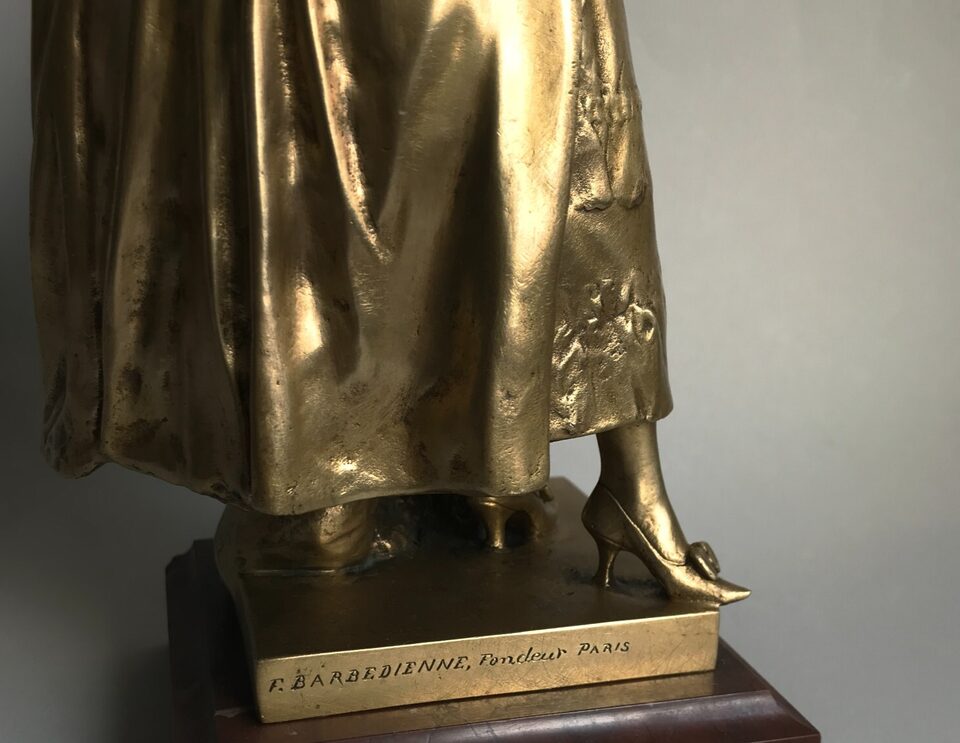
The sculpture was produced by the Barbedienne foundry, a reference for 19th century art bronzes. The Barbedienne workshops are known for the quality of their castings and their gilding, often described as regular and luminous. The sculptor’s work can be read here in the details of the costume, the face and the mask. The gilding highlights the volumes and emphasizes the flexible lines of the model. This finish characterizes the productions intended for art lovers and collectors of the period.
Materials and proportions
The work is mounted on a red marble base. This choice of material offers a visual contrast with the gilding of bronze. The base has a slight sheen at the back, discreet and without affecting the stability of the whole. The dimensions – height 29 cm, width 16 cm, length 15 cm – make it a sculpture easy to integrate into a display case, an office or a library. The signature of Antonin Mercié and that of the foundry ensure the authenticity of the piece.
A work intended for 19th century art collections
This elegant Louis XV dancer is aimed at collectors of signed bronzes and lovers of academic sculptures. Its balanced composition and elegant subject make it a decorative object suitable for a classic or contemporary interior. The work illustrates the meeting between Mercié’s know-how and the technical expertise of the Barbedienne foundry. It is a representative example of the French artistic production of the late 19th century, sought for its quality of execution and its fidelity to the style of the time.
| Weight | 4 kg |
|---|---|
| Expertise | Gilt bronze sculpture representing a Louis XV dancer holding a mask, signed Antonin Mercié (1845-1915). Made by the Barbedienne foundry, it rests on a red marble base with a slight shine at the back. Beautiful work of the time, in very good condition. |
| Dimensions | H. 29 cm x l. 16 cm x L. 15 cm |
| Weight | 3 kg |
| Services | Take a look at all our elegant decorative pieces by visiting the store. Available and at your disposal, we are here on the contact page for details. Your purchases are protected by solid packaging and international deliveries are handled with great care. Finally, add us to your bookmarks to be the first to discover our newest arrivals. |
Be the first to review “Elegant Louis XV dancer signed Antonin Mercié – Barbedienne gilt bronze, 19th century”
Related products
Sculpture, bronze and ancient marble
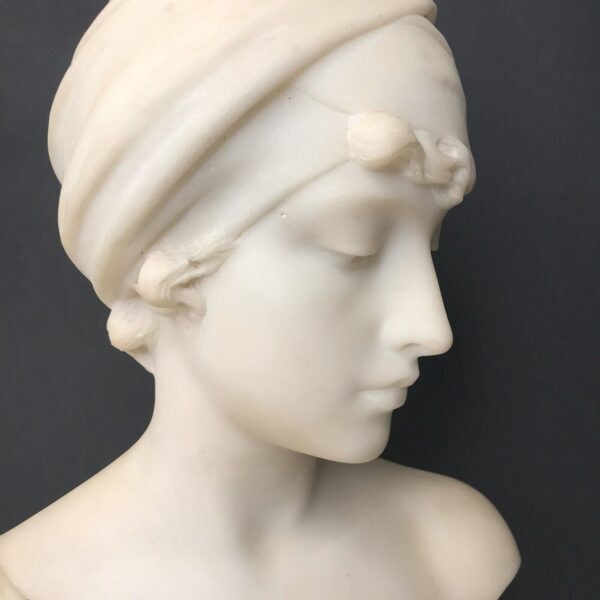
Art nouveau marble bust signed Cesare Lapini – 19th-century Italian sculpture
Sculpture, bronze and ancient marble
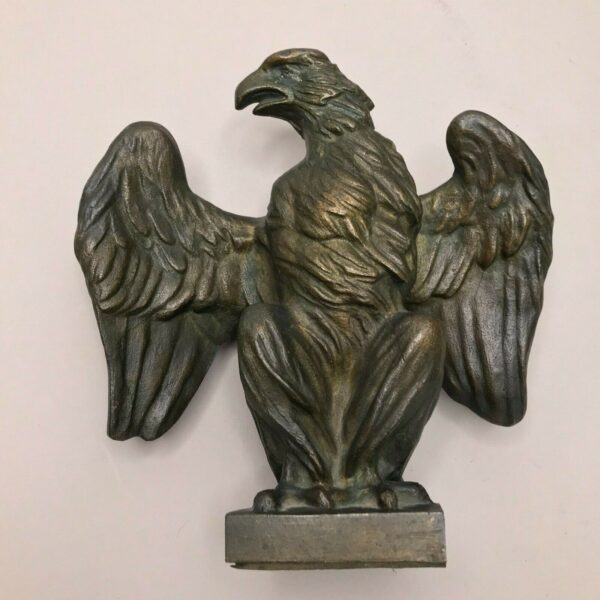
IMPERIAL BRONZE EAGLE, Empire or Roman Standard Style, Antique 19th-Century Vintage
Sculpture, bronze and ancient marble
Sculpture, bronze and ancient marble
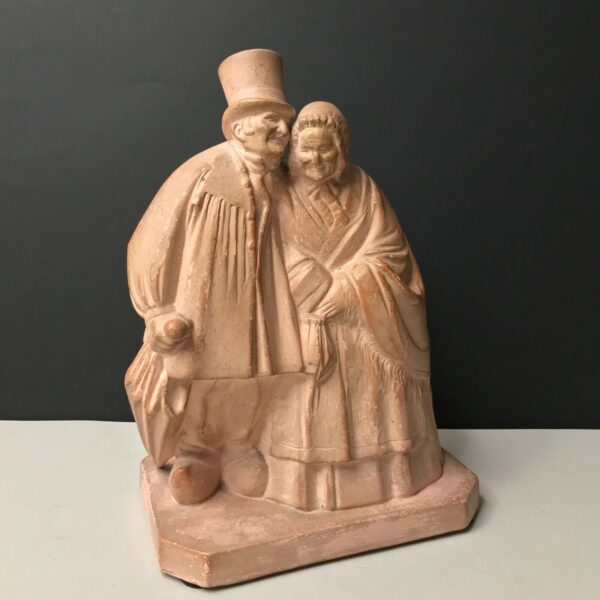
NORMANS COUPLE, terracotta from V. BECQUEREL marked ETLING late 19th early 20th century
Reviews
There are no reviews yet.