





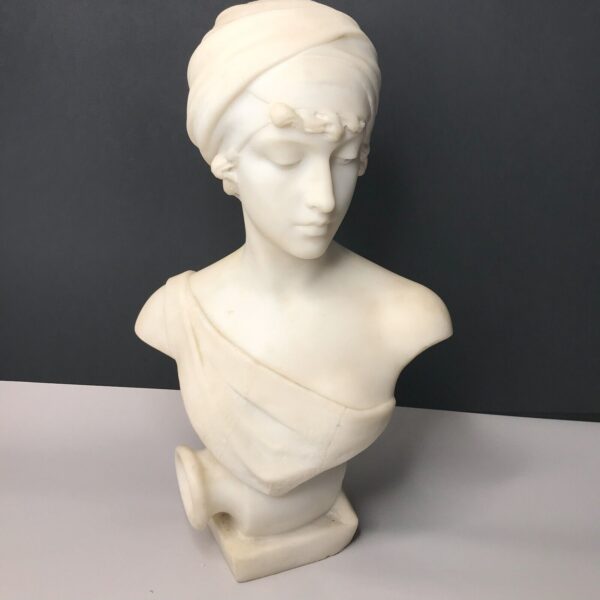
Art nouveau marble bust signed Cesare Lapini – 19th-century Italian sculpture
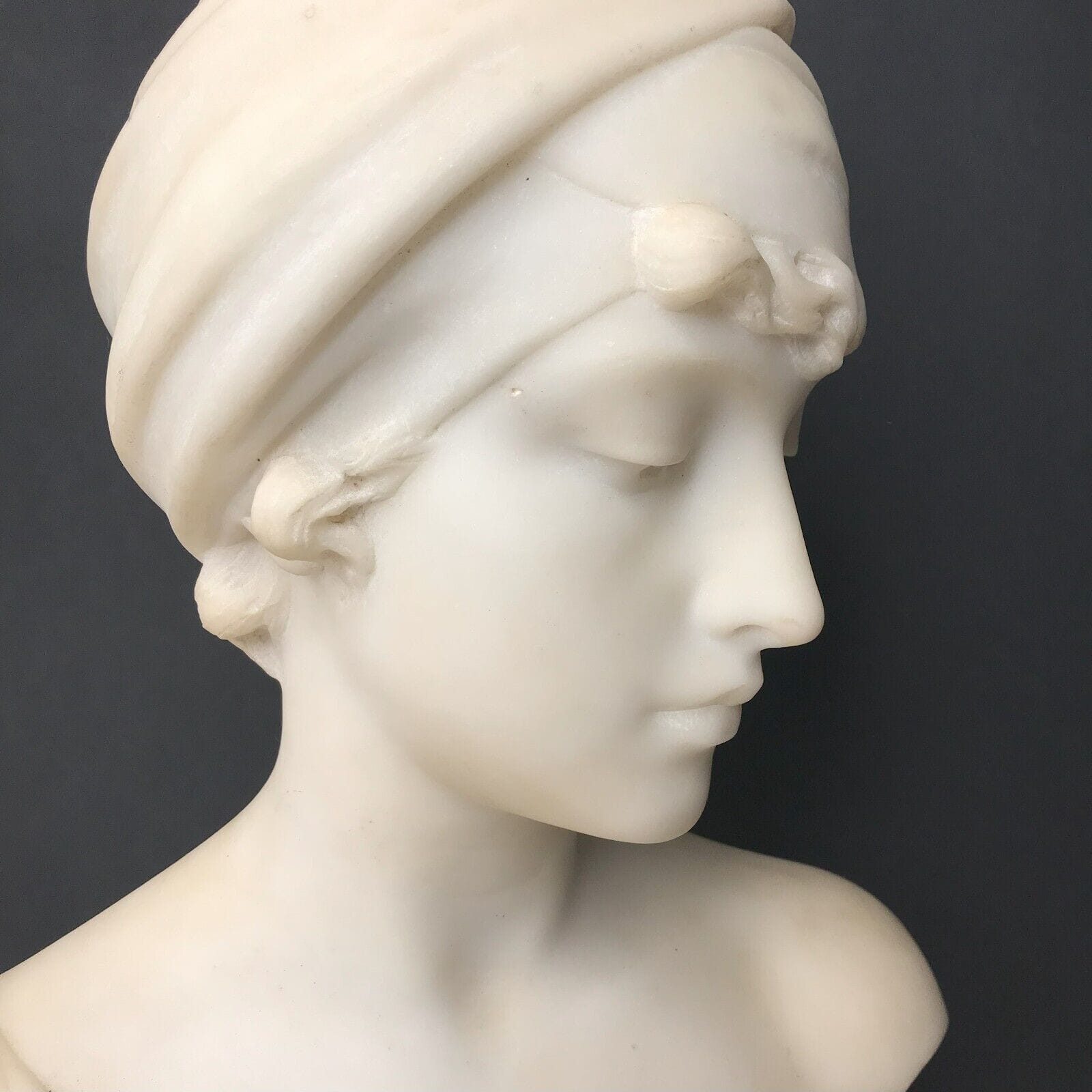
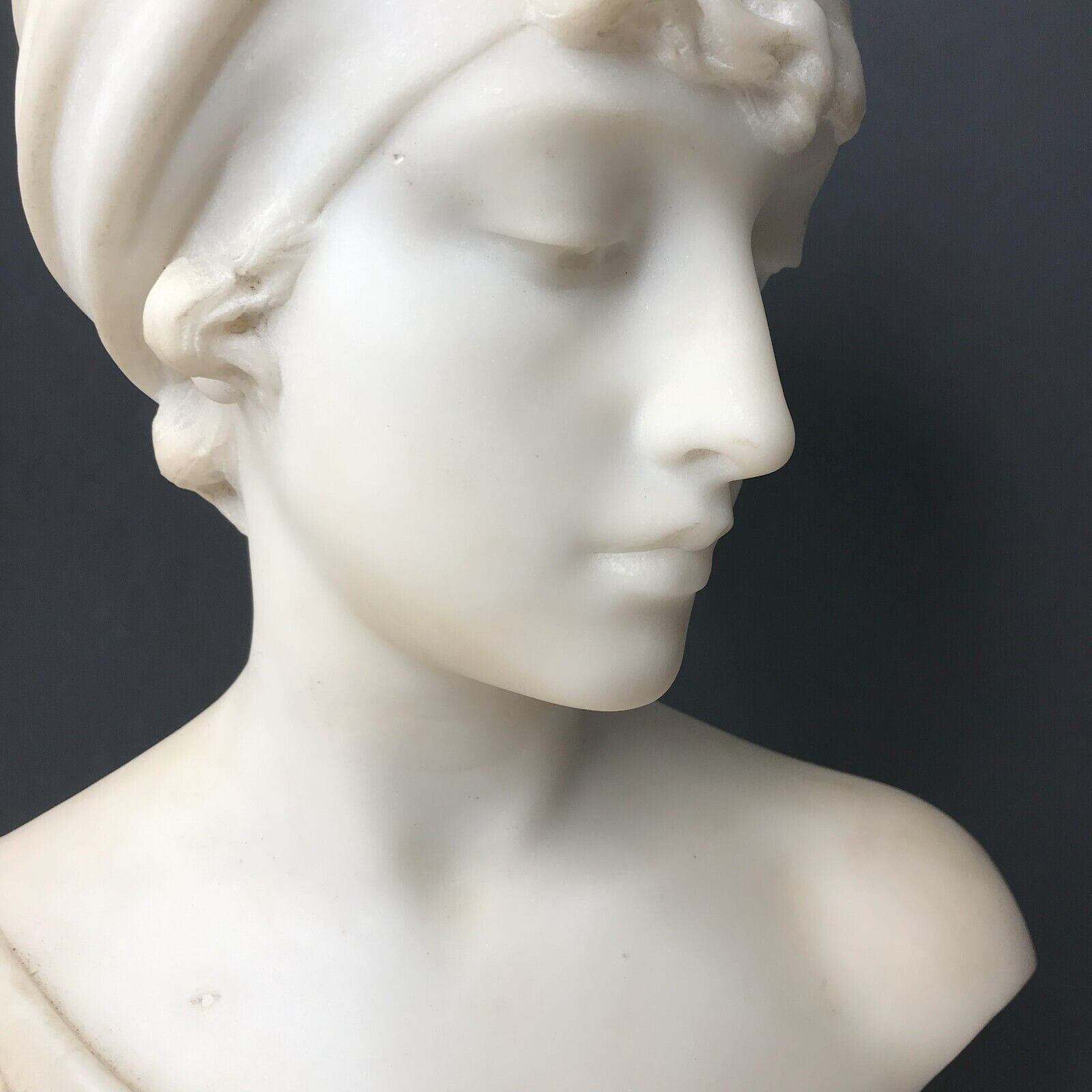
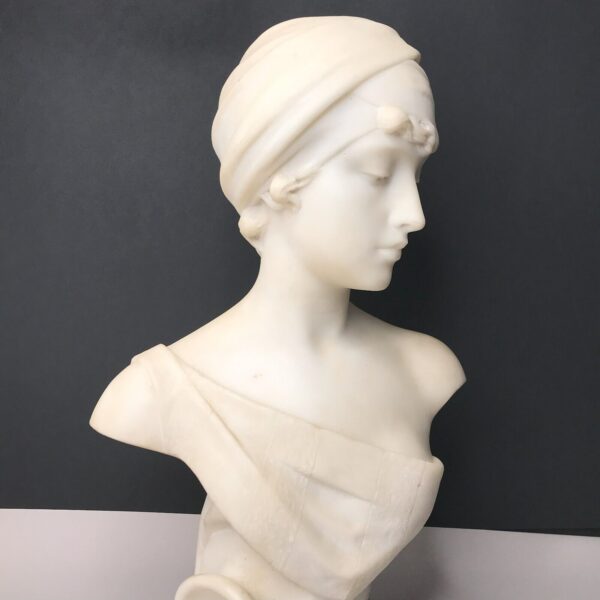
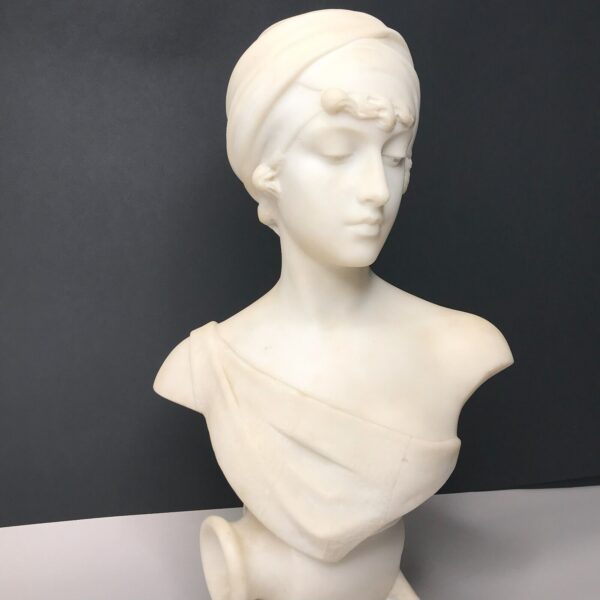
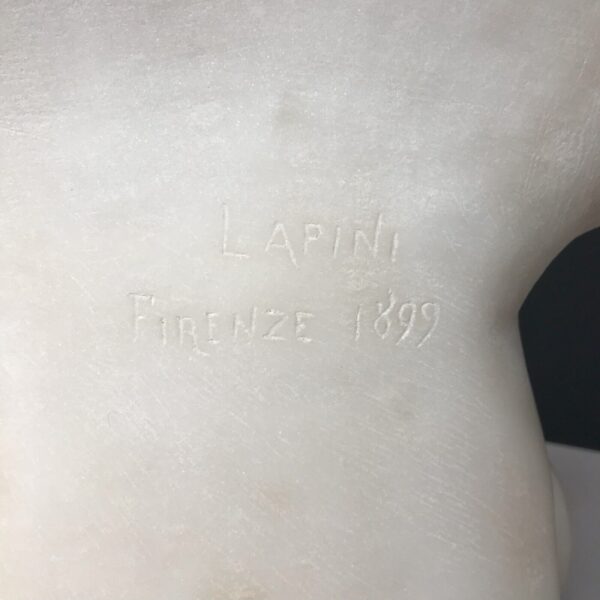
This magnificent Carrara white marble bust signed Cesare Lapini is signed on the back Lapini Firenze 1899. It was created by the sculptor Cesare Lapini in Florence. This work gracefully embodies the renewal of the Renaissance in Italian sculpture of the late 19th century. Cesare Lapini draws his artistic inspiration from the works of the great neoclassical sculptors of the early century. These sculptures sometimes resemble the giant Antonio Canova.
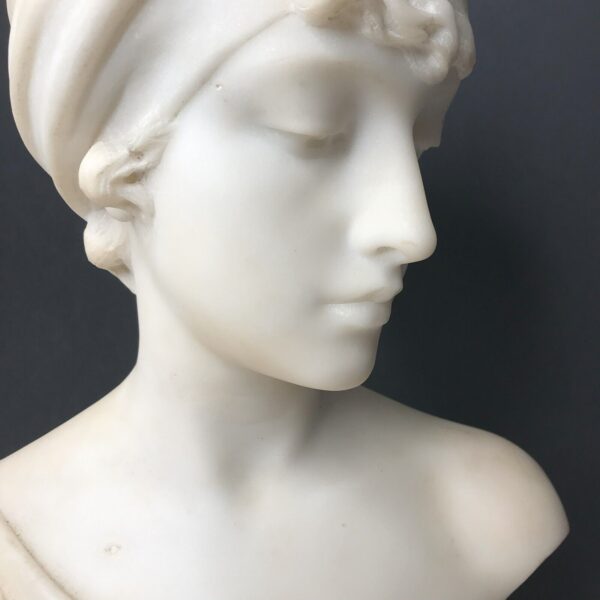
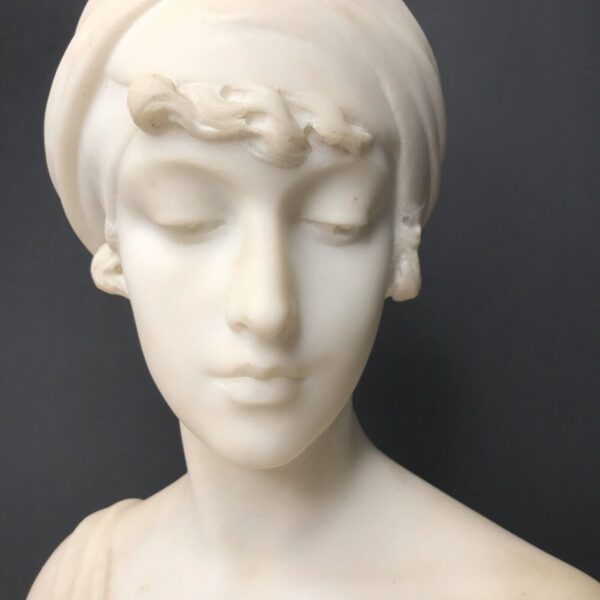
The young woman’s face is sculpted with great softness in the fine Carrara marble.
This antique art nouveau marble bust is imbued with poetry, perfect for collectors of Italian art and authentic decorative works.
This white marble bust signed Cesare Lapini beautifully illustrates the finesse and grace of late 19th-century Italian sculpture. It is sculpted from high-quality Carrara marble, distinguished by the softness of its features and the light caressing its polished surface. The young woman’s face, both serene and expressive, embodies an ideal of beauty dear to Lapini: a pure femininity, imbued with poetry and modesty.
Cesare Lapini and neoclassical white marble
Born in Florence in 1848, Cesare Lapini belongs to the great tradition of Tuscan sculptors, heirs of Canova and Italian classicism. A sensitive artist, he strives to represent the grace and tenderness of feminine figures, often inspired by mythological, religious, or sentimental themes. Among his most famous works are Rebecca (1885), Psyche abbandonata (1895), and The Wrestlers (1891). His signature “Lapini Firenze” appears on many marbles, a guarantee of provenance and excellence. The 1899 vintage, engraved on the reverse, places this piece in the last period of his activity, marked by a freer and more naturalistic expressiveness.
A marble bust between art nouveau and romanticism
In this work, Lapini transcends the strict framework of neoclassicism to introduce a modern sensibility akin to nascent Art Nouveau. The supple lines, the delicacy of the face, and the movement of the drapery convey a breath of life and emotion. Light glides over the marble, revealing every detail of the modeling and imbuing the sculpture with an almost spiritual presence. This blend of antique rigor and modern sensuality makes the bust a piece of perfect harmony, bearing witness to the artistic transition between two centuries.
A signed, located, and dated collector’s item
Bearing on the reverse the engraved signature “Lapini Firenze 1899”, this bust constitutes an authentic and rare piece by the Florentine sculptor. Its remarkable state of preservation and the quality of its cut make it a sought-after work of art on the international market. A true symbol of Italian refinement, it evokes both the eternal beauty of marble and the sensibility of an era when sculpture became the art of emotion. A choice acquisition for any 19th-century art collector or admirer of Italian marbles.
| Weight | 5 kg |
|---|---|
| Matière |
Be the first to review “Art nouveau marble bust signed Cesare Lapini – 19th-century Italian sculpture”
Related products
Decorative Arts, Antiques
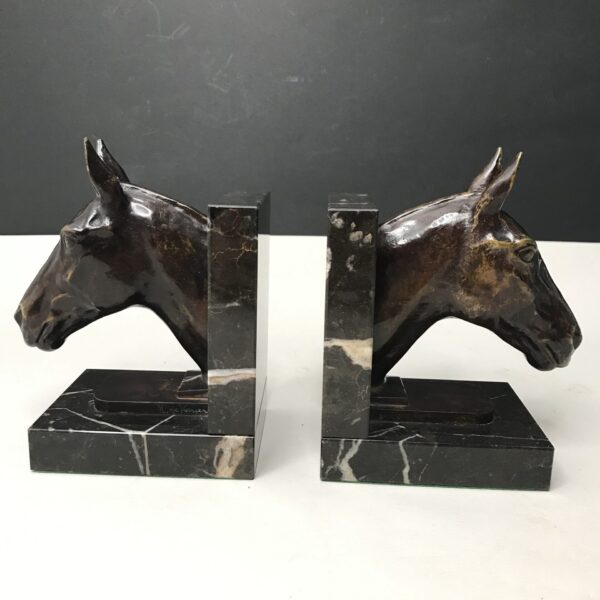
ART DECO HORSE BOOKENDS, Bronze, Signed Max LE VERRIER, Portor Marble, Vintage
Sculpture, bronze and ancient marble
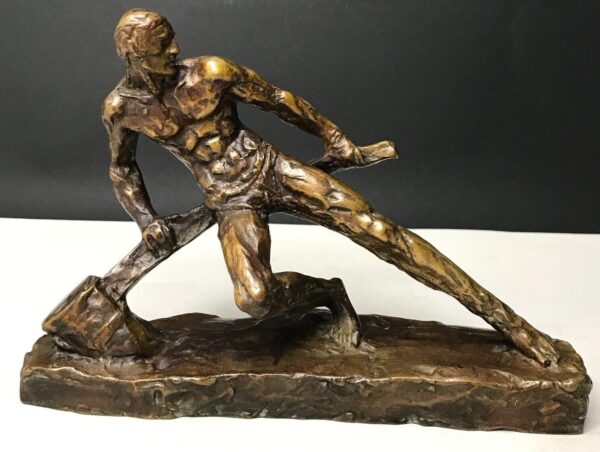
SAILOR PILOT signed LE FAGUAYS bronze M LE VERRIER mid-century ART DECO antique
Sculpture, bronze and ancient marble
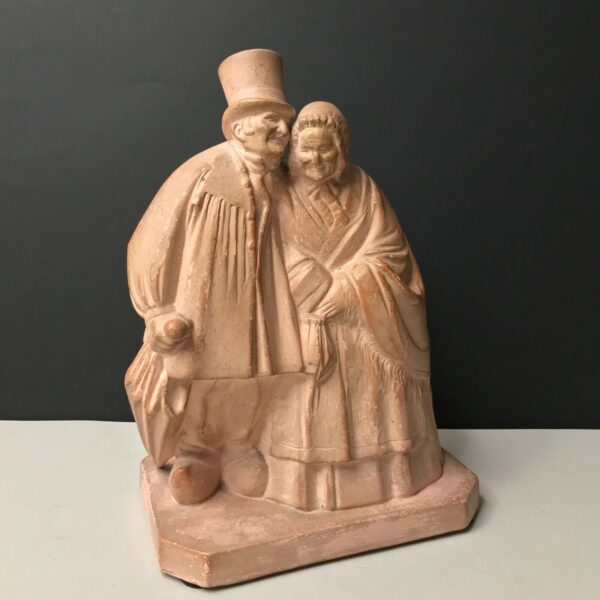
NORMANS COUPLE, terracotta from V. BECQUEREL marked ETLING late 19th early 20th century
Decorative Arts, Antiques
Gilded bronze and cloisonné enamel Crucifix Holy Water Font – F. Barbedienne
Reviews
There are no reviews yet.