

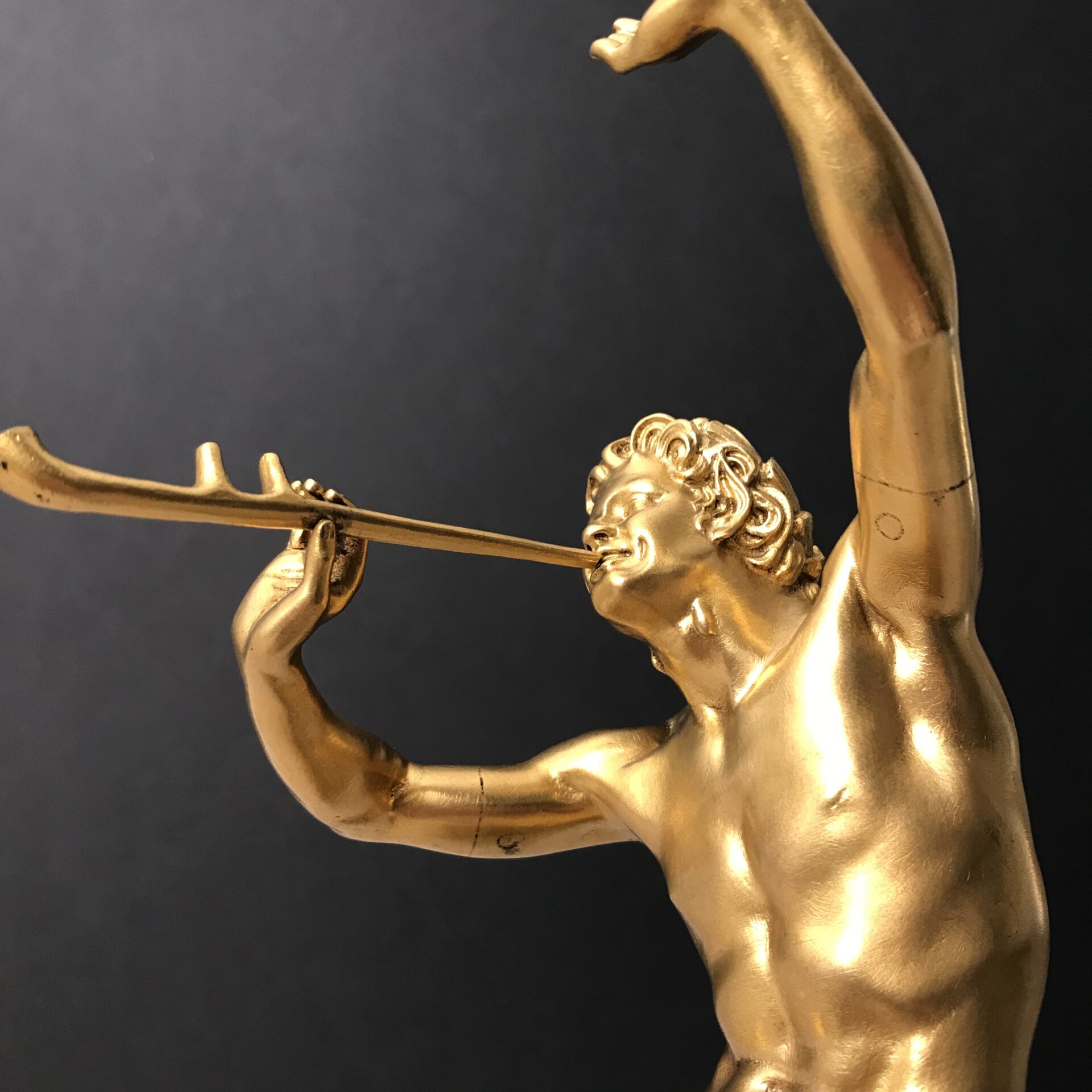
dancing faun
Gilded bronze mythological statuette signed E. Lequesne – Susse founders
Hello All,
A friend called me last weekend to present an antique bronze that he wishes to sell, my price estimation is requested.
It is a superb elegant 18th century gilt bronze, I feel this beautiful emotion that does not deceive and for which I do this job and decide to buy it for me, it is an unusual and refined piece.
It’s a bit above my budget, but, I’m going to listen to my friend Jean Philippe, an expert in good words, “the price is forgotten, the quality remains,” it always makes me laugh, he is devilishly right!
However, as a good professional, I reason and call on my knowledge to assess the quality and value of this superb sculpture.
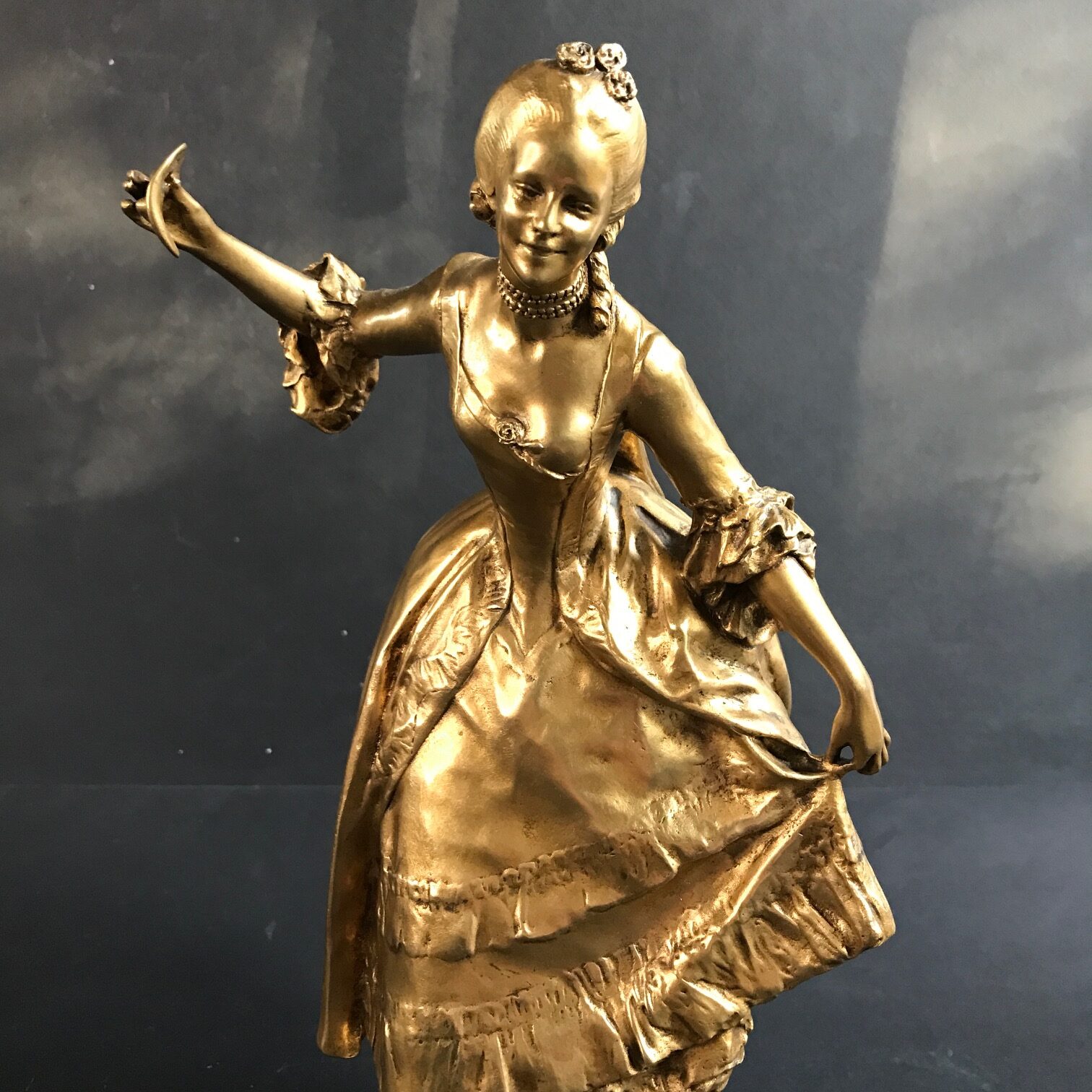
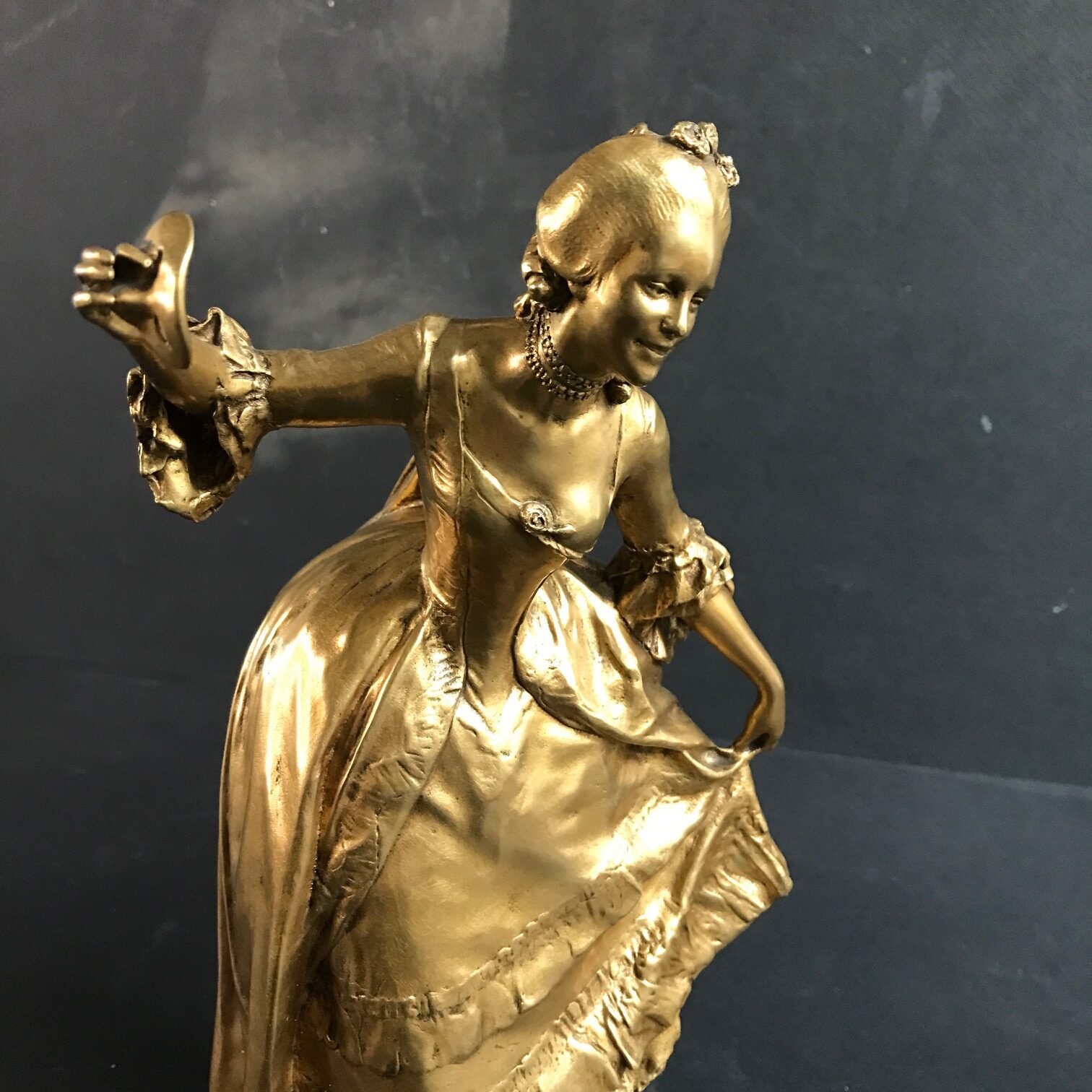
Elegant woman 18th century
Gilt bronze sculpture by Antonin Mercié (1845 – 1916)
mask
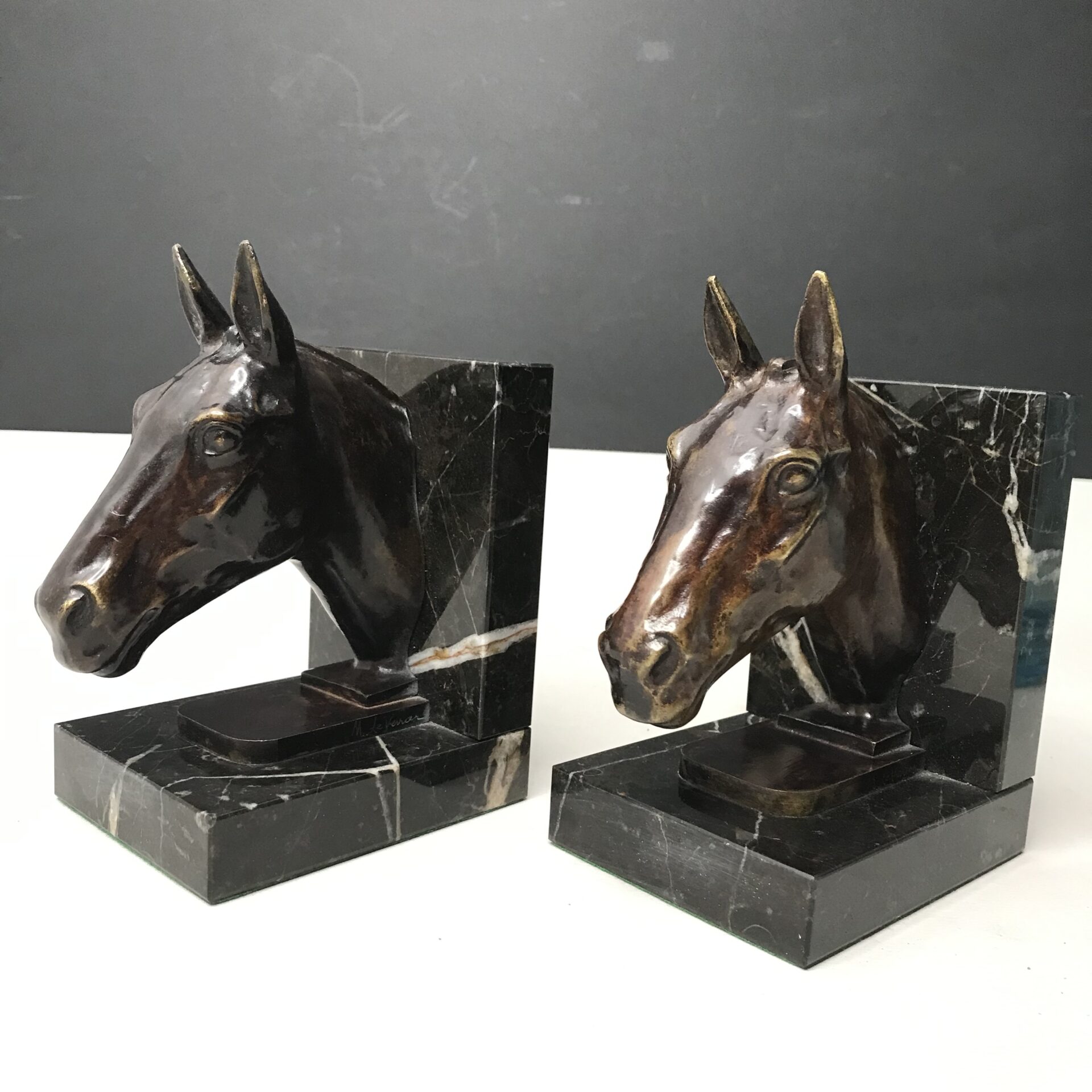
Signed Barbedienne fondeurs, red cherry marble base
Summary:
- How to recognize authentic bronze and estimate its value?
- What are the methods for determining the origin of an ancient bronze work?
- Observe the visual aspect
- Examine the details and the chisel
- Authenticate signatures and founder’s stamps
- What does the casting number of a bronze statue mean?
- How to differentiate a lost wax cast iron from a sand cast iron?
- Look at the underside of a work
Remember:
- You have to listen to your emotion and surround yourself with beautiful things ‘the price is forgotten, the quality remains’:-)
- Seek quality in details, look at the underside of a bronze work
- Identify the traces of eras, techniques, and authors and ensure that the whole is coherent.
- Determining the provenance is very important for estimating a bronze
- Take the opportunity to cultivate oneself, learn the know-how of artisans, the mood of the time, history, fashion, the inspiration of authors…
- And come back to see us 🙂
How to recognize authentic bronze and estimate its value?
There are several factors to be well estimated, the material, the melting time, the authorization of reproduction, the authenticity of the signature then the rating of the artist.
# What is a real bronze?
- Is it within our rights to reproduce a bronze sculpture?
- How to date an ancient bronze?
- Can a cast iron sculpture made after death be considered authentic?
- Is the number of reproductions of a sculpture legally limited?
- What is an art cast?
- What is an edition cast?
# Definition
First, a bronze is the outcome of molding an exclusive sculpture that was cut or modeled from various materials such as terracotta, plaster, wood, and stone.
The work of art can be reproduced in multiple copies, making it no longer unique. The question of truth, copy, or reproduction is a question of language.
Note:
To avoid altering the artist’s original work with successive casts and manipulations, a first cast is used which will be molded and cast to become the mother of all the other reproductions. For fragile works in terracotta, clay or other materials, a first plaster cast is created called workshop plaster or master model which will serve as a model for all the following bronze casts. this proof will be either in plaster or in bronze, more solid.
To remember:
These are therefore already copies of copies. The expertise and know-how of the founders and molds are therefore essential to be as close as possible to the original work. The era of casting and the validation by the artist of his works during his lifetime guarantee a high quality. The estimate and the price will be valued.
One can speak of forgery only if the object is supposed to be what it is not, if the signature is imitated, if the bronze pretends to be old or if the sculptors rights are not respected.
The goal is therefore to determine the quality of the work. Is it a recent reproduction that has only a decorative interest or is it a validated work by the artist who will have corrected the final result of the casting during his lifetime?
We will therefore be interested in assessing the origin of an ancient bronze based on precise criteria. We will authenticate the manufacturing characteristics, the marks affixed to the statue, the cast era and the origins.
What are the methods for determining the origin of an ancient bronze work?
The artist’s family, a museum or a great collector are the most reliable guarantee of the origin and authenticity of an ancient bronze.
The collector’s grall, a proven prestigious provenance guarantees the authenticity of your desired ancient Roman bust. Even if we do not have a collection worthy of the Louvre, our acquisitions are precious to us and their origin contextualizes the piece. Expertise can give great value to a piece from an famous collection. A bronze bust of Auguste Rodin (1840 – 1917) passed down in the same family from generation to generation will be precisely dated, its owners known and thus its authenticity is fixed. Often, a painting from the artist’s workshop, even unsigned, can panic the auctions and reach a record price. Remember that archaeologists, during excavations on a site for example will always have the scientific concern, when discovering a Greek mythological bronze statue (let’s dream a little) will scrupulously note the site, the date and location in order to be able to place the statue in its context for the future with certainty.
Observe the visual aspect
The first approach concerns the general aspect, is it pleasant to look at, does the subject suit your collection, your tastes, does it seem and expressive and a quality work ?
Often this subjective analysis helps to clarify my choice, personally, the pleasure I will have in spending time with a work is the only important criterion in my eyes.
Indeed, one can fall for a modern edition piece without great historical value but estimate that it will have a sublime effect in our living room.
One can also have an informed glance for an ancient bronze whose authenticity will plunge us into another era.
So, emotion, yes, but being well informed.
By observing an ancient bronze well, one can have a good idea of its authenticity.
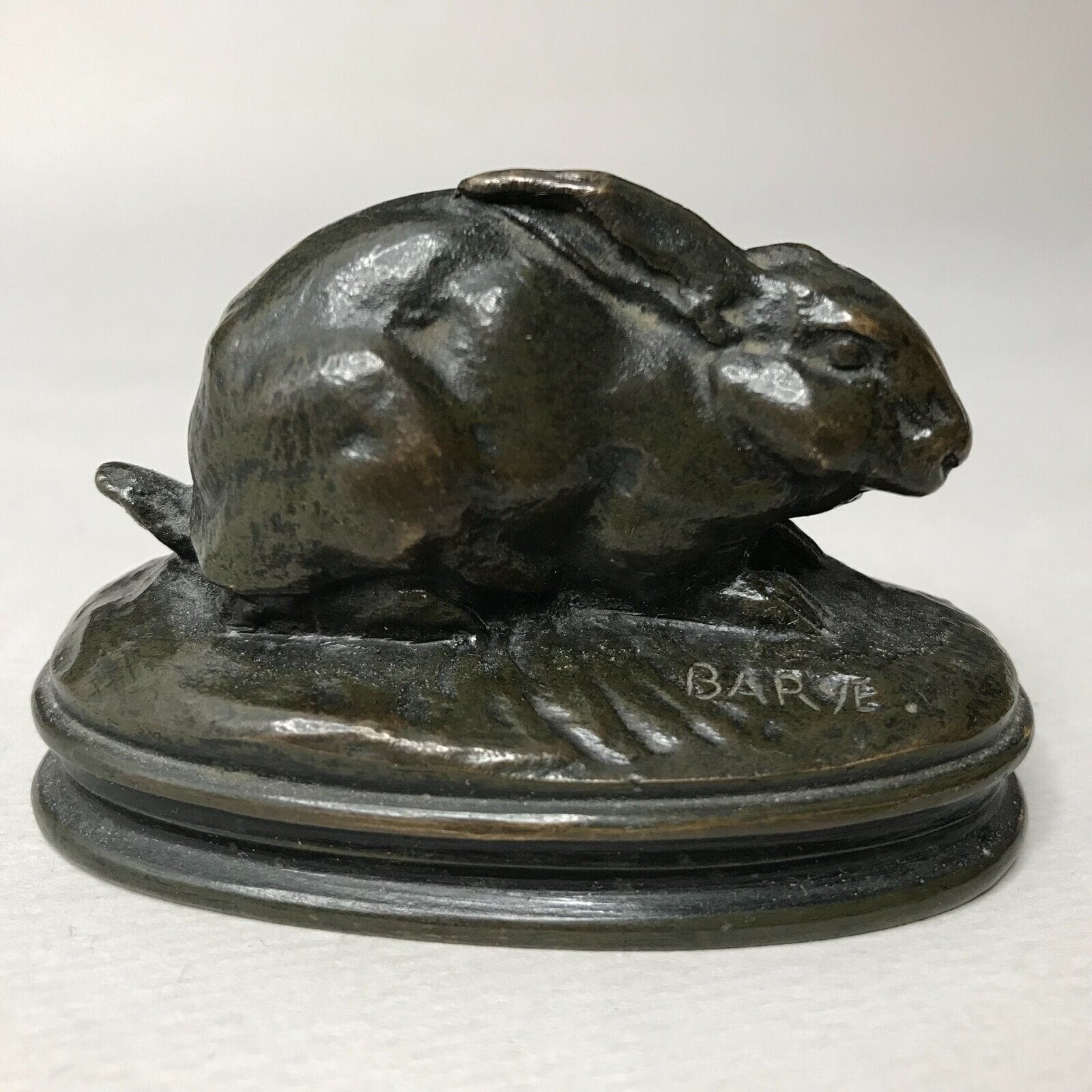
Examine the details and the chisel
The alloy has been used since ancient times for its tremendous ability to reproduce details.
The bronze sculpture comes out raw from its mold after casting. After the shakeout (destruction of the mold and the core), comes the deburring and removal of the casting tunnels.
Then, the bronze statue is finely worked, the chisel works cold the small imperfections of the metal and reveals all its details. The traces of mold joints are erased and the artist’s work is revealed by this craftsman specialized in finishes. The result is a bronze closer to the original work. His talent plays a large part in the quality of the sculpture.
This requires labor time and know-how; the perceptible details after examination are a very reliable indicator of the origin of the statue. Scratches, small holes, or coarse surfaces are to be avoided. These defects are also revealing of a molded part several times; we talk about overmolding. The work eventually loses its original form.
We visually appreciate the nervousness of the sculpture and the finesse of the lines. These are the signs of a foundry workshop with great know-how and proximity to the original work taken out of the artist’s hands.
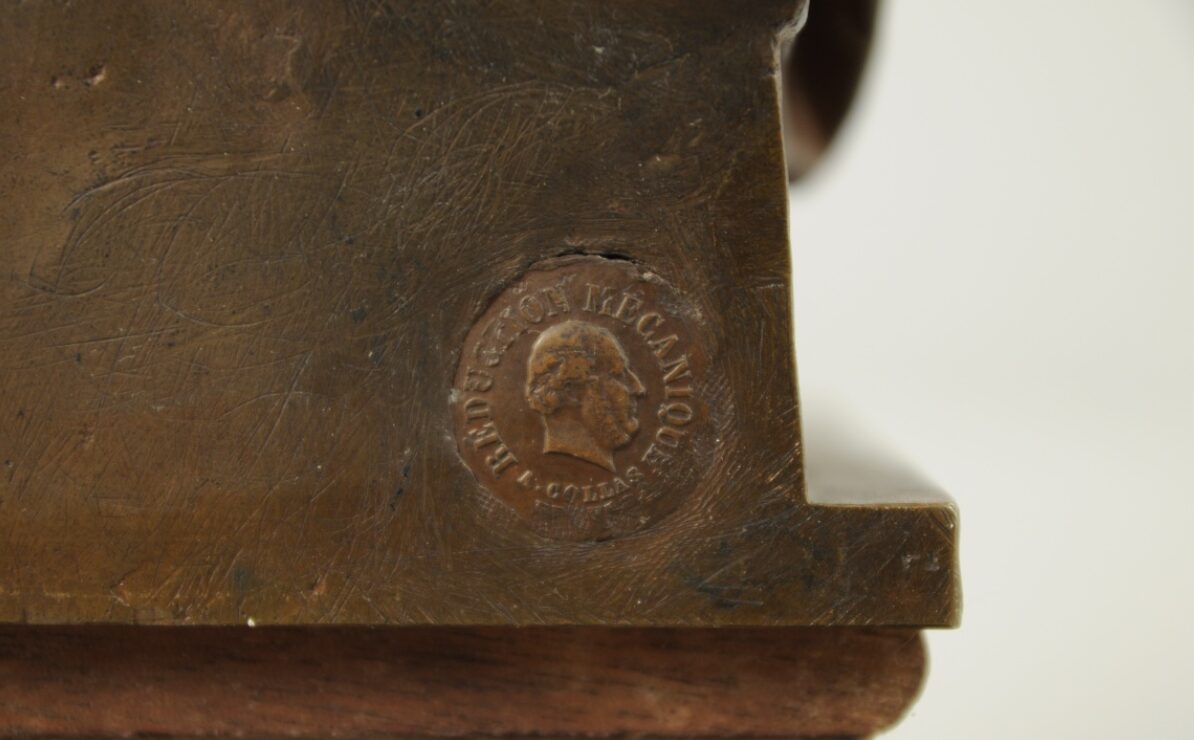
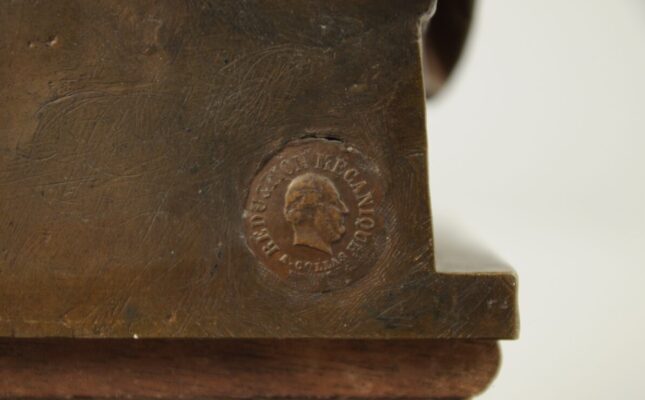
Achille Colas’s stamp
Patented mechanical reduction process
How can founders’ signatures and stamps be authenticated?
Comparing bronze models from vintage models and in museums allows us to expertise and date a bronze’s by observing how the sculptor’s signature and founder’s marks change over time.
The author’s signature provides valuable indications to experts, including typography, depth size, and sometimes even spelling mistakes (the worst exists).
Founders often affix their stamps, rightly called foundry stamps, displaying their know-how and origin. Barbedienne, Valsuani, Susse and many others have evolved their brand, allowing us to find valuable information and date the time at which the cast of our ancient bronze was melted. For the Maison Barbedienne, founded in 1834, there were a succession of signatures: F. Barbedienne, founder of Barbedienne, then Leblanc Barbedienne.
Lost wax, bronze, and reduction stamps are other indications that can be found. Achille colas are often marked with a type of crimping pliers.
The signature on the font is believed to be authentic, but other fonts, such as those by Demetre Chiparus (1886 – 1947), can be signed at the tip of the marble base.

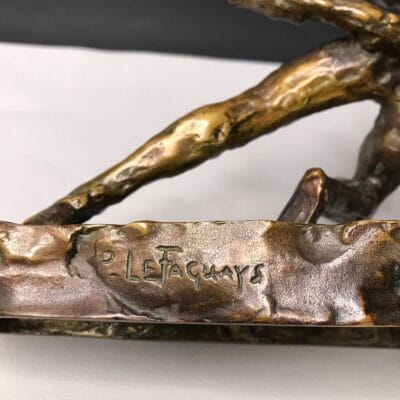
Le pilote
Sailor signed P. Le Faguays, lost wax of Max Le Verrier

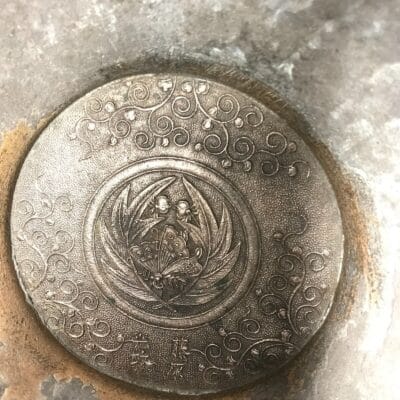
Butterfly and Japanese ideograms
Meiji era foundry seal at the bottom of a superb bronze vase with water dragon decoration
What do the numbers mean on a bronze?
In France, since 1968, the number of art proofs has been limited to 12, consisting of 8 works of art and four artists’ proofs. Other numbering systems from earlier periods correspond to the edition series of the founders.
Before the law of 8 March 1935 legislating art bronzes, the limit on the number of reproductions and the duration of rights before falling into the public domain had evolved since the 18th century. From this date, fonts are limited to the number 8.
Only certain foundry experts decide to number their productions or to apply them, such as Ferdinand Barbedienne with his gold stamp, a FB mark on the bronze specifying a cast iron of very high quality.
At the beginning of the 20th century, certain sculptors such as the group of 12, François Pompon (1855 – 1933) and Georges Lucien Guyot (1885 – 1972), began to limit and number their production to preserve the artistic authenticity of their creations.
It was in 1968 with the Malraux law, pursuant to the decree of June 10, 1967, that the French state added 4 artist’s proofs rated EA from I/IV to IV/IV. Will therefore be considered original, 12 prints, 8 numbered copies and four marked EA for artist’s proofs that the sculptor has at his leisure but not marketable. They are nevertheless marketed by the artist, galleries and auction rooms.
What is the difference between lost wax casting and sand casting?
# How to recognize a lost wax bronze ?
Certain features include great detail precision, a very smooth surface, and curves that are visible under the bronze.
Wax, like sand, allows printing upon contact with the work (or the model). In addition to the high precision of molding due to its fluidity, it allows the artist to come and touch up the wax proof and sign it before the bronze cast.
The Rodin museum presents some educational videos on this know-how.
Observing the appearance of an art deco bronze melted with wax by Max Le Verrier and sculpted by Pierre le Faguays, also known as Guerbe or Fayral, the surface is very smooth and the details stand out. We are closer to the artist’s work and we could almost see by looking closely at the artist’s fingerprints…
Sand casting provides a more rounded appearance to the curves of an ancient bronze bust. This was a guarantee at that era.
This technique was abandoned at the end of the 19th century, during the 20th century the foundry workshops cast their bronze statues with lost wax.
# The eras of melting
The sand casting technique was used in the 19th century until the early 20th century. It requires more assembly and chiselling, and therefore more manpower.
Lost wax began to be used at the beginning of the 20th century and then became the only technique in foundry workshops. This gives us an indication for the estimation of the melting time.
Note:
It is highly probable that the animalist bronze by a sculptor from the beginning of the 19th century with the characteristics of lost wax is a production from the 20th century.

The pilot
The back model with specific details
look under
By returning a statue, we make several observations:
- Bends indicating wax drips
- The color of the traces of oxidation, the green of gray of the copper, allowing to estimate its age, be careful if there are only some underneath and not in small corners like on an animalist bronze from the life of Barye for example, it is not coherent.
- The assembly (with keys?) is also decisive, screws and other traces.
- The presence of refractory plaster, remains of the core.
- The thickness of copper, between 5 and 7 mm for a sand bronze and much lower for lost wax.
- The base is an indication; it is typically carved out of marble in the period’s style.
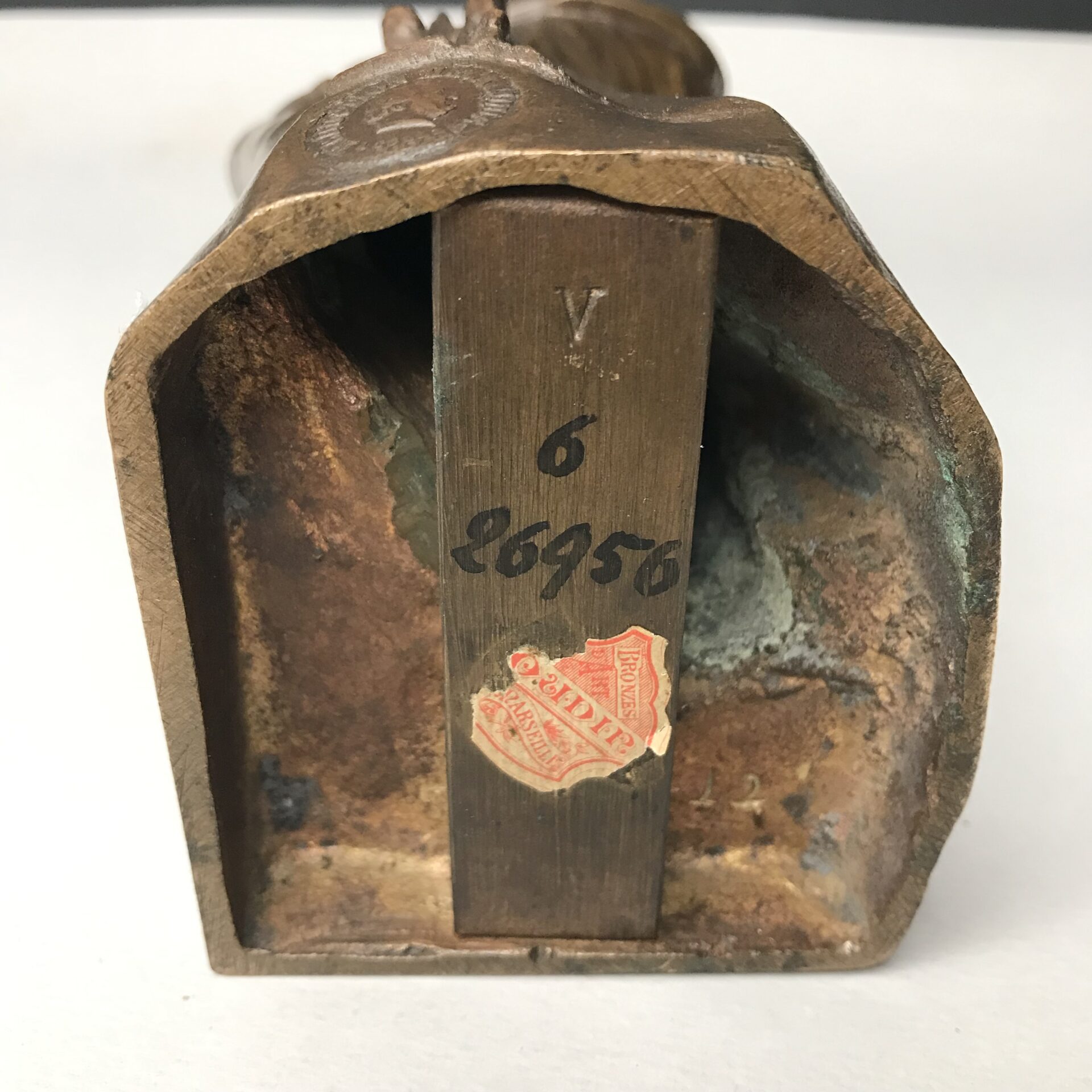
Venus de Milo
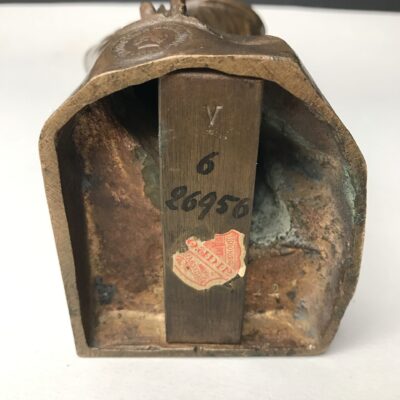
Jeweler’s label, workshop writing and Collas stamp
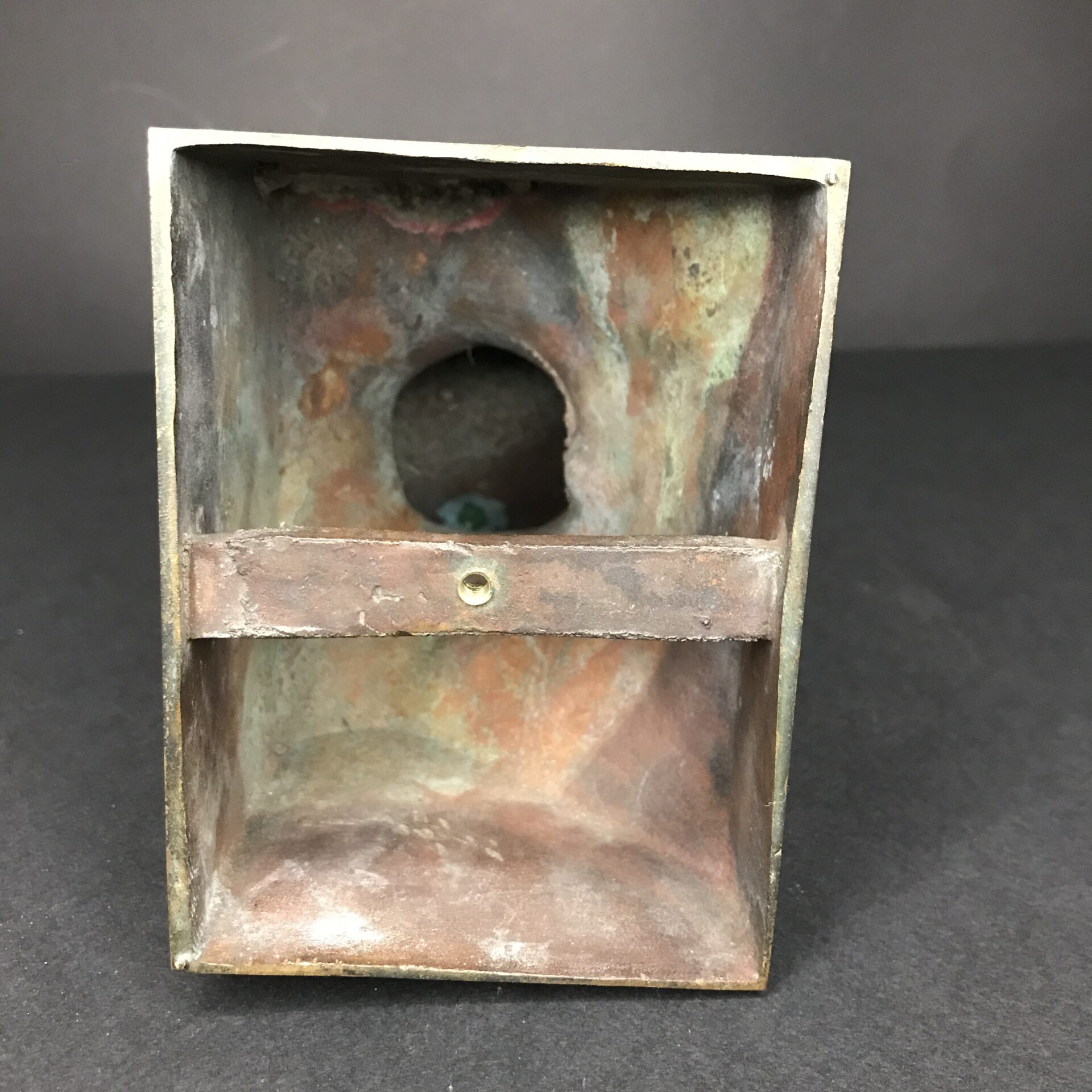
Bust of General Foy
Very fine thickness of the bronze casting.
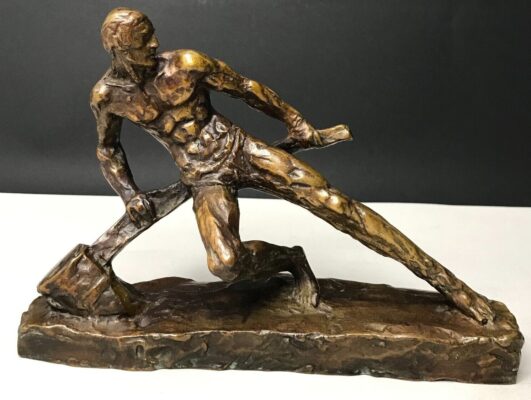 Lost wax casting signed by the workshops of Max le Verrier (1891 – 1973)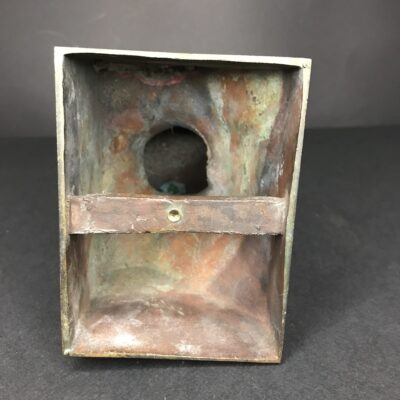
Soon, we will have some articles to follow.
Posthumous fonts, copyright, respect for a work, and public domain